Choosing between a mixer-settler (box) circuit and an extraction column is the first major design decision in any solvent extraction flowsheet — and it is a decision that is expensive to reverse. Both contactors move the same chemistry forward; they differ in geometry, stage behavior, tolerance to solids, and above all in how confidently you can scale them up from a test tube.
This comparison is written from the perspective of lab and pilot-scale hydrometallurgical work, where that last point usually decides the argument.
The Fundamental Difference
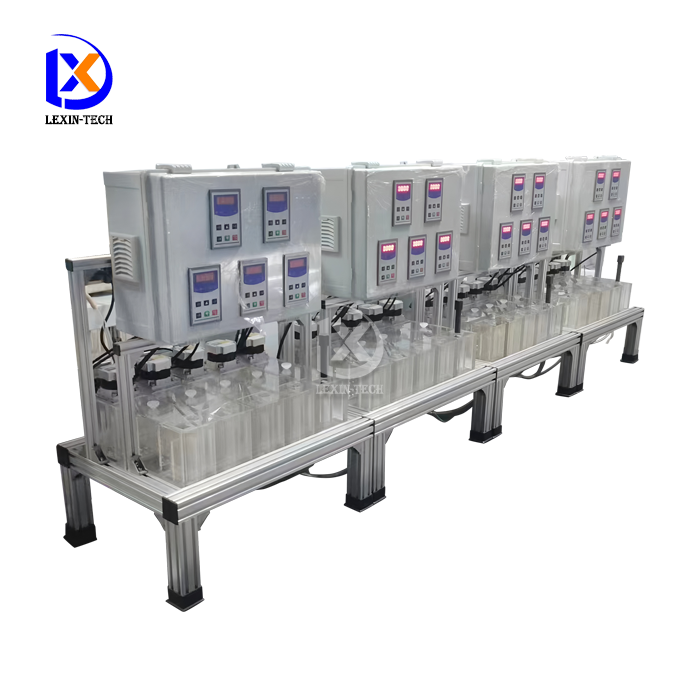
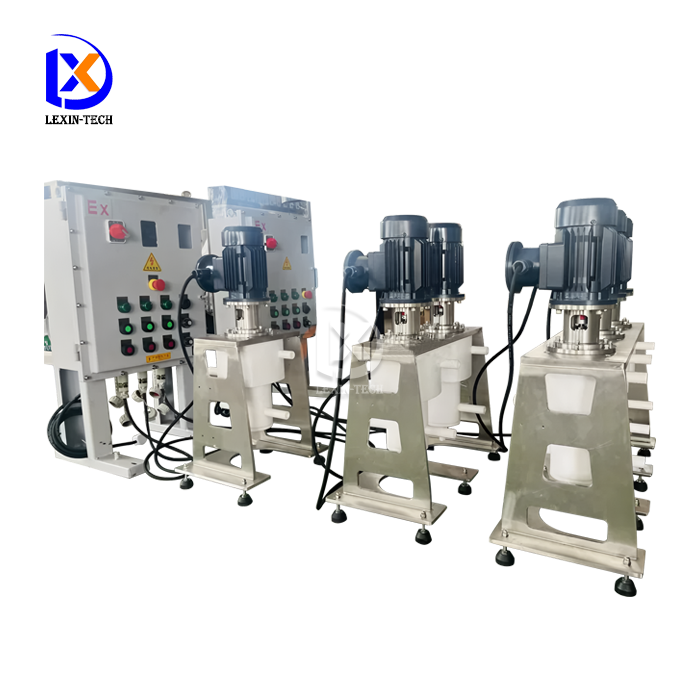
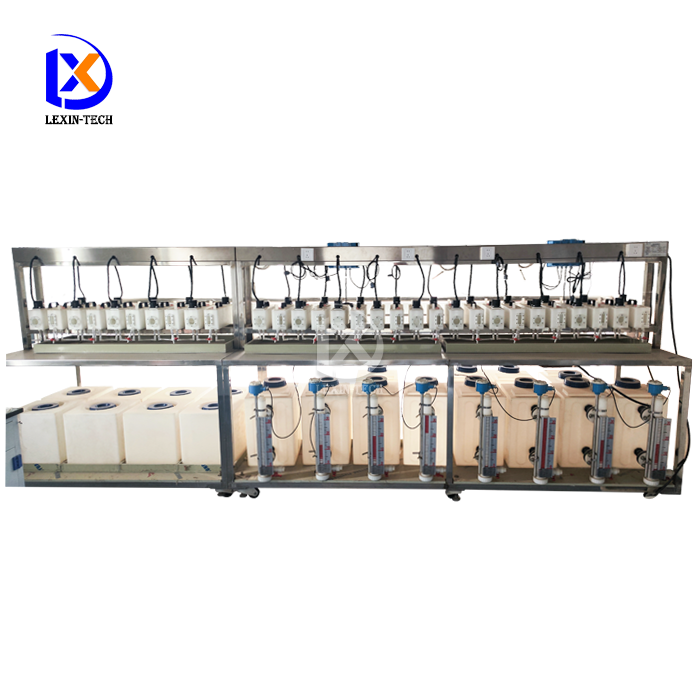
A mixer-settler circuit repeats one discrete stage many times: mix (dispersing the two phases for mass transfer), then settle (letting them separate) in a paired box. Each stage is a physical unit you can see, sample and adjust. Stage-by-stage control is explicit.
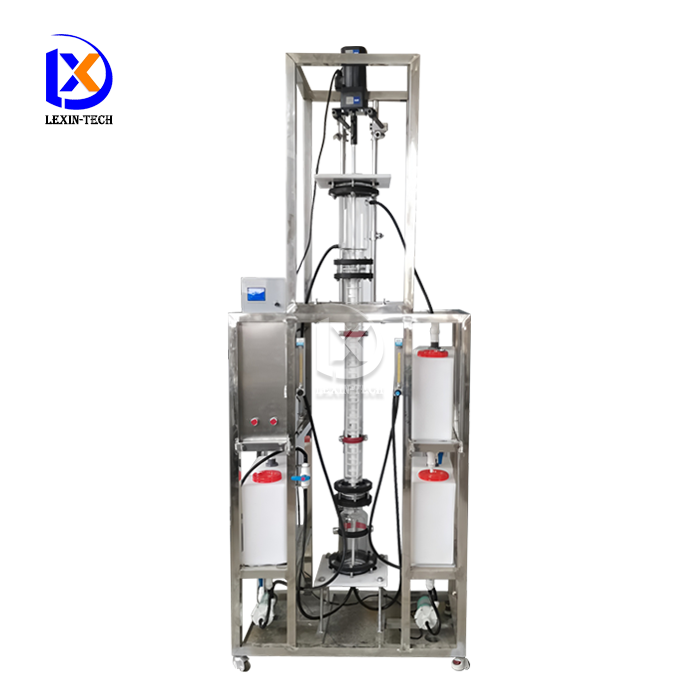
An extraction column attempts the same mass transfer continuously inside one tall vessel: the two phases flow counter-currently through internals (pulsed plates, rotating discs, sieve trays, packed beds), and the separation emerges along the column height rather than in numbered stages.
That difference drives everything below.
Head-to-Head Comparison
| Factor | Mixer-Settler | Extraction Column |
|---|---|---|
| Stage efficiency | 90%+ per stage, measurable stage by stage | Height equivalent to a theoretical stage (HETS) varies with system; scale-up is empirical |
| Solids tolerance | Good — solids report to the settler and can be skimmed | Poor to moderate — internals foul, disc stacks plug |
| Visual observability | Full: interfaces, droplet size, crud all visible | Limited to sight glasses and sampling points |
| Scale-up confidence | High: hydrodynamics stay similar from lab box to plant box | Moderate: pulsation, flooding and HETS shift with diameter |
| Footprint | Large plan area, low height | Small plan area, tall |
| Solvent inventory | Higher (each settler holds a phase inventory) | Lower |
| Residence time | Minutes per stage — good for slow kinetics | Seconds to a minute or two |
| Closed operation | Open surfaces (vapor/air exposure) | Fully enclosed (good for volatile/cooling systems) |
| Maintenance | Simple, mechanical, room-temperature parts | Internals and rotating/pulsating systems are more specialized |
| Best duty | Multi-stage circuits, slow kinetics, solids, pilot work | High throughput, clean feeds, limited floor space, tall-building fit |
Five Questions That Actually Decide It
1. How many stages do you need?
For circuits needing more than 4–5 theoretical stages (rare-earth separations, nickel/cobalt purification trains), a column starts looking attractive because boxes multiply. But check the assumption behind the column's stage count: HETS values come from systems similar to yours. If your chemistry is unusual, the column's "20 theoretical stages" may be optimistic in a way you only discover at commissioning. A mixer-settler delivers its stage efficiency where you can measure it — box by box.
2. Does your feed carry solids?
Leach liquors from real ore almost always do. Crud and suspended fines are the classic column killers: they foul discs and packing, and cleaning a column means opening a tall vessel. Mixer-settler settlers handle solids as a skimmable layer (see our note on crud formation and treatment).
3. How well do you know your system?
If this chemistry has been run industrially at scale in a column — by you or by a licensor with data — the scale-up risk is bounded. If you are developing a new system (novel extractant, unusual metal, battery-recycling black mass), a pilot mixer-settler campaign generates stage data you can trust, and the data transfers to larger boxes far more reliably.
4. How much floor space do you have?
A 5-stage box circuit with 1 m² settlers needs serious floor area. Columns stack stages vertically. For installations inside existing buildings with height but no footprint, the column argument is real.
5. Is your chemistry fast or slow?
Columns give droplets seconds of contact. Slow mass transfer (viscous phases, interfacial reactions) wants mixer-settler residence times.
What This Means at Lab and Pilot Scale
For laboratory and pilot campaigns, the industry default is clear: start with mixer-settlers.
- Stage efficiency is measurable, so your McCabe–Thiele count reflects reality.
- The phase boundary is visible — crud, entrainment and phase-ratio problems announce themselves early.
- Flow rates and stage configuration can be changed between runs with a screwdriver, not a rebuild.
- PP and PMMA construction gives chemical resistance and, in the transparent version, full visibility of the dispersion band.
Columns earn their place later: at production scale, with proven chemistry, where their compactness and low solvent inventory pay off. Many operating plants actually run both — box circuits for the difficult, solids-bearing extraction steps and columns or centrifuges for polishing or scrubbing duties.
FAQ
Can a column replace a multi-stage mixer-settler circuit one-for-one?
Only if its HETS under your conditions is known. The equivalent height depends on flooding approach, pulsation intensity and system physical properties — established empirically, not from a datasheet.
Which is cheaper for a pilot plant?
The mixer-settler, almost always — and it is re-usable across campaigns. Pilot columns are specialty equipment for a specific duty.
Are mixer-settlers harder to staff?
They need operators who understand interface control and crud management, but the skills are teachable because everything is visible. Column troubleshooting requires deeper instrumentation.
What about centrifugal extractors?
They are a third contactor family: tiny residence times, compact, excellent for fast kinetics and high-value solvents. Fouling tolerance is the weak point. See the 80mm rotary drum centrifugal extractor for the lab-scale version.