MVR vs Multi-Effect Evaporation: Energy and Cost Calculator
Choosing between MVR and multi-effect evaporation is an operating-cost decision driven by the ratio of your electricity price to your steam price. Enter the evaporation rate, the number of effects you are considering, and your local utility costs, and this calculator returns the steam demand and running cost of each route side by side.
Results
The results appear here and update as you type. Each result is followed by the conditions under which it holds.
How to use it
- Establish the evaporation duty
Work out kilograms of water to be removed per hour from the mass and heat balance of your actual liquor — feed rate, inlet and outlet concentration, and any crystallization. Use the duty, not the feed flow.
- Estimate the multi-effect steam demand
Steam economy is roughly 0.8 times the number of effects for a clean, well-operated train. Real economy falls with boiling point elevation, scaling and venting losses, so treat it as an upper bound.
- Estimate MVR compressor power
Power per tonne of water evaporated depends mainly on the temperature lift you must achieve, which in turn depends on the boiling point elevation of your liquor. Viscous, high-solids liquors need a bigger lift and consume more.
- Price both routes with your own tariffs
MVR converts a steam bill into an electricity bill. The comparison only means anything with your site's actual tariffs, including demand charges on the electrical side.
- Add the costs this calculator does not cover
MVR needs no cooling water, which is a genuine saving; MEE needs cooling water for the condenser. Against that, the MVR compressor is the most maintenance-sensitive and most expensive single item in the plant, and its availability sets the plant's availability. Compare total cost of ownership, not just utilities.
Formulas used
MEE steam  ≈ W / (0.8 × N)                     W = evaporation rate, N = effects
MEE cost/h = steam × steam price / 1000
MVR power  = W × (specific demand / 1000)      kW from kWh per tonne and kg/h
MVR cost/h = MVR power × electricity price
Break-even:  MVR wins when  power price / steam price  <  1 / (0.8 × N × specific demand)
Assumptions & applicability
- ★ This is an operating-cost comparison only. It excludes capital cost, maintenance, cooling water, the effect of liquor viscosity on achievable heat transfer, and differences in product crystal quality — all of which can outweigh the utility saving.
- Multi-effect steam economy is estimated as 0.8 × N. Real economy is lower because boiling point elevation, scaling, non-condensable venting and condensate flashing all reduce the temperature difference available in later effects.
- MVR specific electricity demand is an input, not a prediction. It depends on the required temperature lift, the compressor type and its efficiency, and the vapour volume — which rises sharply as the evaporating temperature falls.
- Both routes are assumed to operate at the same evaporation rate and the same product concentration. Any difference in achievable concentration or in product quality is not captured.
- MEE cooling water consumption is not costed. On a site where cooling water is expensive or restricted, this omission materially favours MEE.
- No allowance is made for start-up steam, for turndown behaviour, or for the separate start-up steam that an MVR unit still requires.
FAQ
How many effects should an evaporator have?
For hydrometallurgical liquors, three effects is the usual compromise. Each additional effect adds roughly one unit of steam economy but also adds a vessel, capital cost and residence time, and it consumes temperature difference — which matters more as the liquor becomes concentrated and its boiling point elevation grows. Beyond about four effects the marginal gain is usually small relative to the added complexity.
Is MVR always cheaper to run than multi-effect evaporation?
No. MVR trades steam for electricity, so it wins where electricity is cheap relative to steam and loses where the reverse holds. It also depends on the temperature lift your liquor requires: a high boiling point elevation needs a larger compressor and erodes the advantage. Run the numbers with your own tariffs and your own duty.
What are the drawbacks of MVR?
The compressor is the expensive, maintenance-intensive item, and it is a single point of failure for the whole evaporation step. MVR also has less operating flexibility at very low load, it still needs steam for start-up, and it performs poorly on heavily scaling liquors because the scale reduces the heat transfer that the compressor's pressure rise has to overcome.
Terms used above
Equipment sized with this calculation
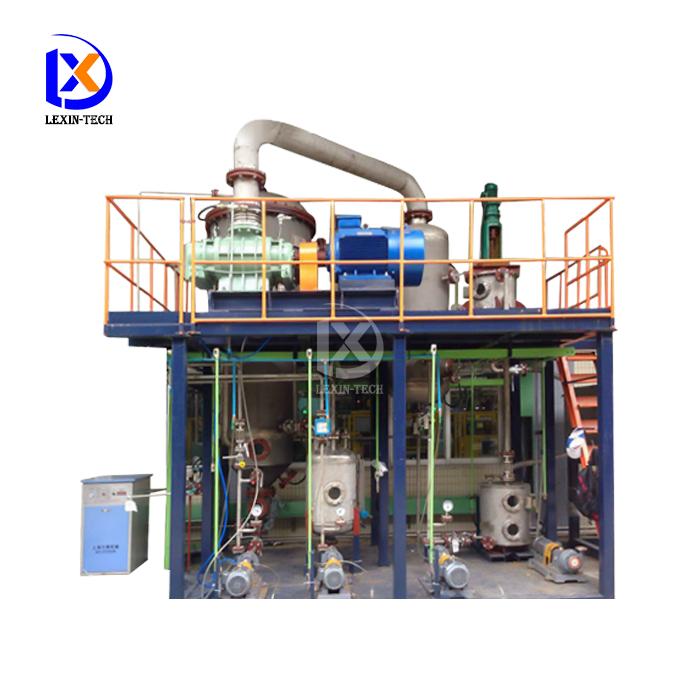
MVR Evaporation Crystallization Unit
8 Specifications · evaporation crystallization equipment
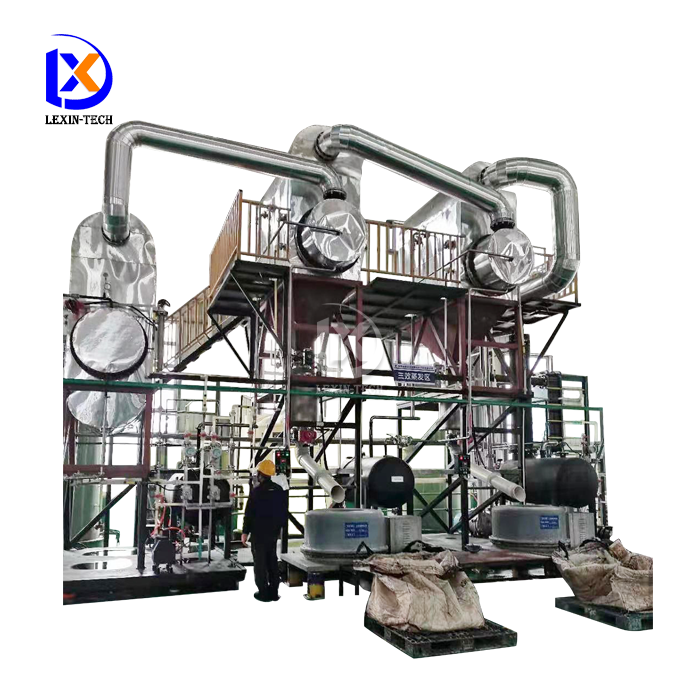
Triple-Effect Evaporation Crystallization Unit
8 Specifications · evaporation crystallization equipment
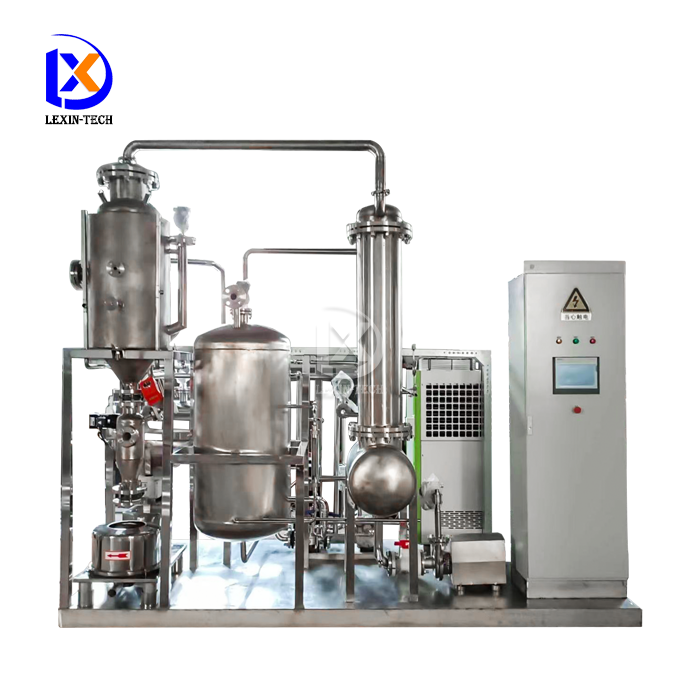
Laboratory Evaporation Crystallization Unit
7 Specifications · evaporation crystallization equipment
Further reading
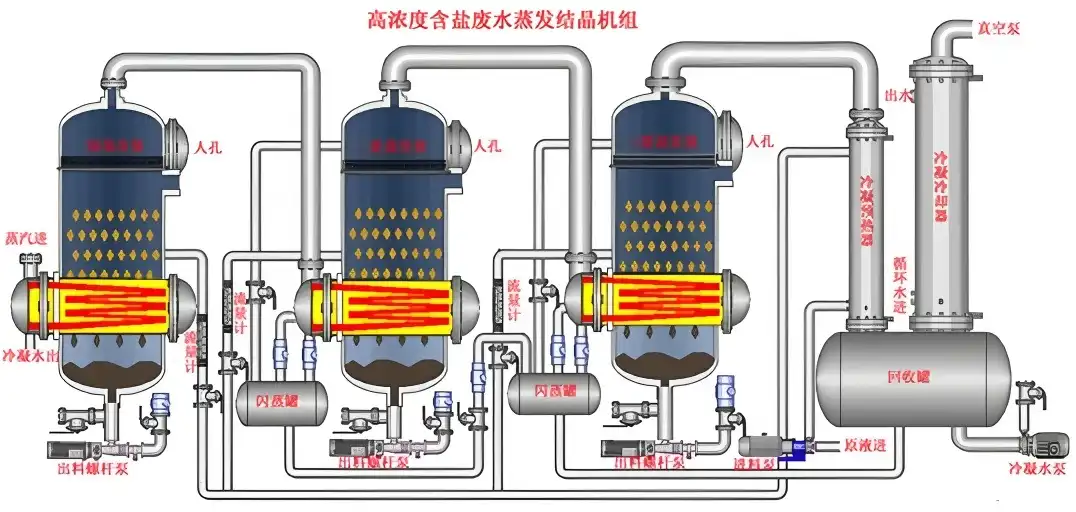 KBAre Triple-Effect Evaporation Crystallization Units automated?are-triple-effect-evaporation-crystallization-units-automated
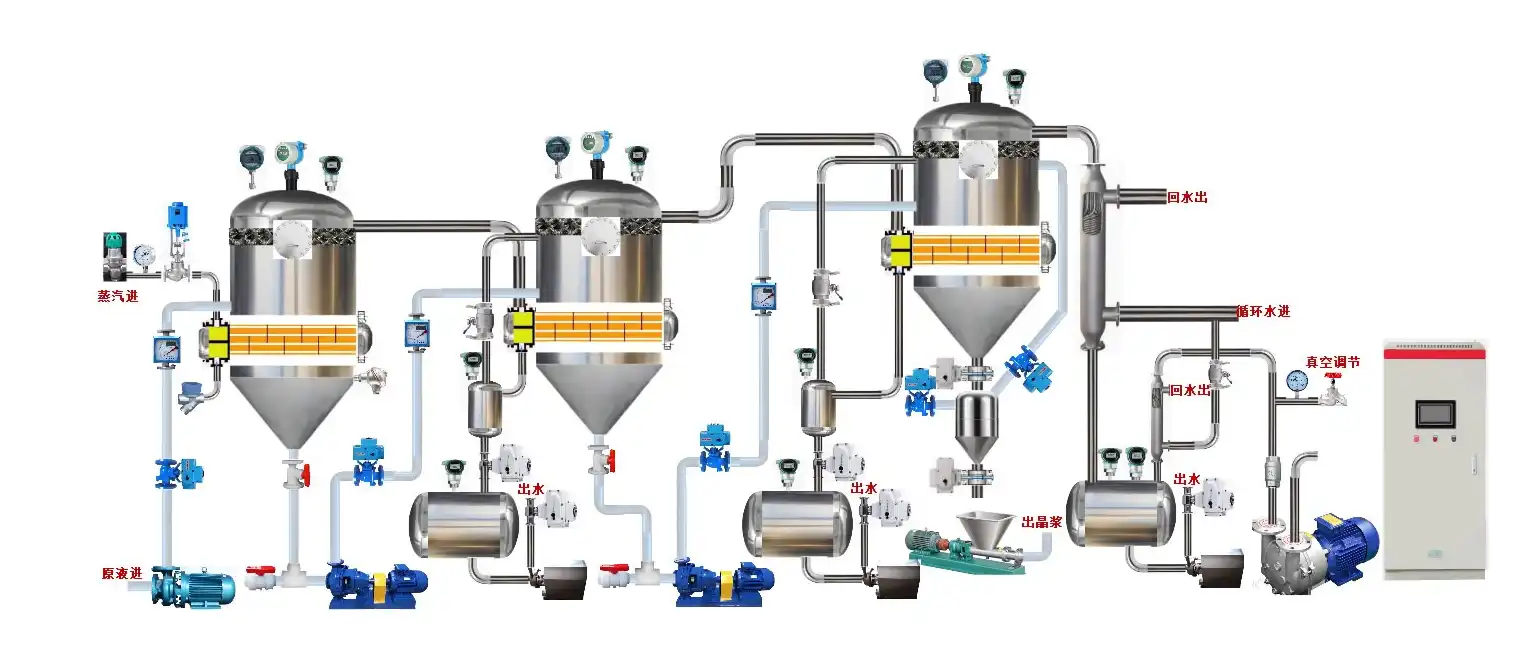 KBWhat's the Role of Vacuum in Evaporation Crystallization Equipment?what-s-the-role-of-vacuum-in-evaporation-crystallization-equipment
Get this sized against your own material
The calculator returns a pre-feasibility number. For a quotation we need the feed assay, throughput, medium and temperature — and, where the result hinges on it, test data from your own material.
Request a sized quotation Ask an engineer a questionCalculator reference TL-MVR-VS-MULTI-EFFECT-ENERGY. This tool is provided for preliminary engineering estimates. Final equipment selection must be confirmed against test work on your own material and reviewed by a qualified process engineer.