Electrowinning Current Density, Production and Energy Calculator
This calculator converts your cell current and cathode area into current density, applies Faraday's law to give theoretical production, corrects it by current efficiency, and turns cell voltage into specific energy consumption per tonne of metal. It is a mass-balance tool for sizing a cell house or interpreting a bench cell — not a deposit-quality prediction, which depends on electrolyte flow, temperature and additives as well as on current density.
Results
The results appear here and update as you type. Each result is followed by the conditions under which it holds.
How to use it
- Fix the cathode area correctly
Count only the wetted cathode area that the current actually travels through. Including anodes, or counting both faces of a plate that is immersed on one side only, is the most common source of a wrong current density.
- Divide current by area
Current density is total cell current divided by total cathode area. It is the number that governs deposit morphology, cell voltage and the acceptable impurity level in the electrolyte.
- Apply Faraday's law
The theoretical mass follows from current, time and the electrochemical equivalent mass of the metal. No assumptions are needed here — it is stoichiometry.
- Correct for current efficiency
Multiply by measured current efficiency. Determine it by weighing the actual deposit against the theoretical mass for the charge passed — that single measurement is the most useful diagnostic you can run on an electrowinning cell.
- Convert voltage into energy
Specific energy is proportional to cell voltage and inversely proportional to current efficiency. Every part of the cell voltage above the decomposition potential is waste heat that has to be removed from the cell house.
- Sanity-check against the operating band
Compare the current density with the range normally run for your metal and electrolyte. If it is far outside it, expect a deposit problem before an energy problem.
Formulas used
Total cathode area A = plate area × number of cathodes
Current density  CD = I / A                            [A/m²]
Theoretical mass  m = (I × t × M_eq) / F                [g]
   F = 96 485 C/mol ;  M_eq in g per mole of electrons
Actual mass = theoretical × current efficiency
Specific energy  W = V / (M_eq × CE) × 26 801     [kWh per tonne]
   factor 26 801 = 3 600 000 × 1000 / (96 485 × 1000) grouped for g and tonne
Cell power       = I × V                         [W]
Assumptions & applicability
- ★ Electrochemical parameters are given as engineering estimates only. Current density, current efficiency and cell voltage are all system-specific — they depend on electrolyte composition, temperature, circulation, additives and electrode spacing — and no single-point value should be treated as a specification.
- Faraday's law is applied to a single-electron-transfer half reaction at 100% faradaic selectivity before the efficiency correction. Side reactions competing for the same current are lumped into the current efficiency you enter.
- Current efficiency is taken as a measured input, not predicted. Iron cycling between anode and cathode, short circuits and dendritic growth all reduce it and none of them can be calculated from the data entered here.
- Cell voltage is taken as measured across the busbars. The split between decomposition potential, overpotential, electrolyte ohmic drop and contact resistance is not modelled.
- Specific energy is per tonne of metal deposited and excludes rectifier losses, cell house ventilation, and any heating or cooling of the electrolyte.
- Deposit quality — smoothness, nodulation, adhesion and purity — is NOT predicted. It depends strongly on the same variables and must be established experimentally.
FAQ
What current density should I run for copper electrowinning?
Most copper tankhouses operate in the range of roughly 250 to 350 A/m², with some running higher. Treat that as a reference band rather than a target: the practical ceiling for a given electrolyte usually shows up first as rough, nodular or dendritic deposit, and the limit depends on electrolyte temperature, circulation rate, acid concentration and additive regime. Establish it in a bench cell with your own solution.
Why is my current efficiency lower than expected?
The usual causes, roughly in order of how often they appear: ferric iron in the electrolyte cycling between the electrodes without depositing metal; electrical short circuits through nodules or misaligned plates; low electrolyte temperature; and leakage current losses. Weighing the deposit and comparing it with the Faraday prediction tells you that you have a loss but not which one — measure the iron concentration first, as it is the most common single cause.
How much energy does electrowinning consume?
Copper electrowinning typically falls in the range of about 1,800 to 2,500 kWh per tonne of cathode, depending mainly on cell voltage and current efficiency. Since specific energy is proportional to voltage and inversely proportional to efficiency, the fastest route to lower energy cost is normally reducing the electrolyte ohmic drop — by shortening the electrode gap or improving conductivity — rather than pushing current density in either direction.
Terms used above
Equipment sized with this calculation
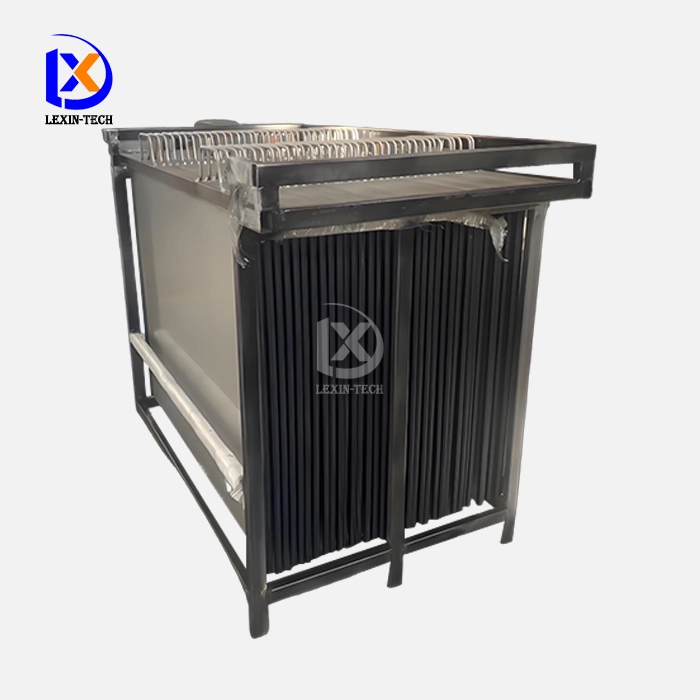
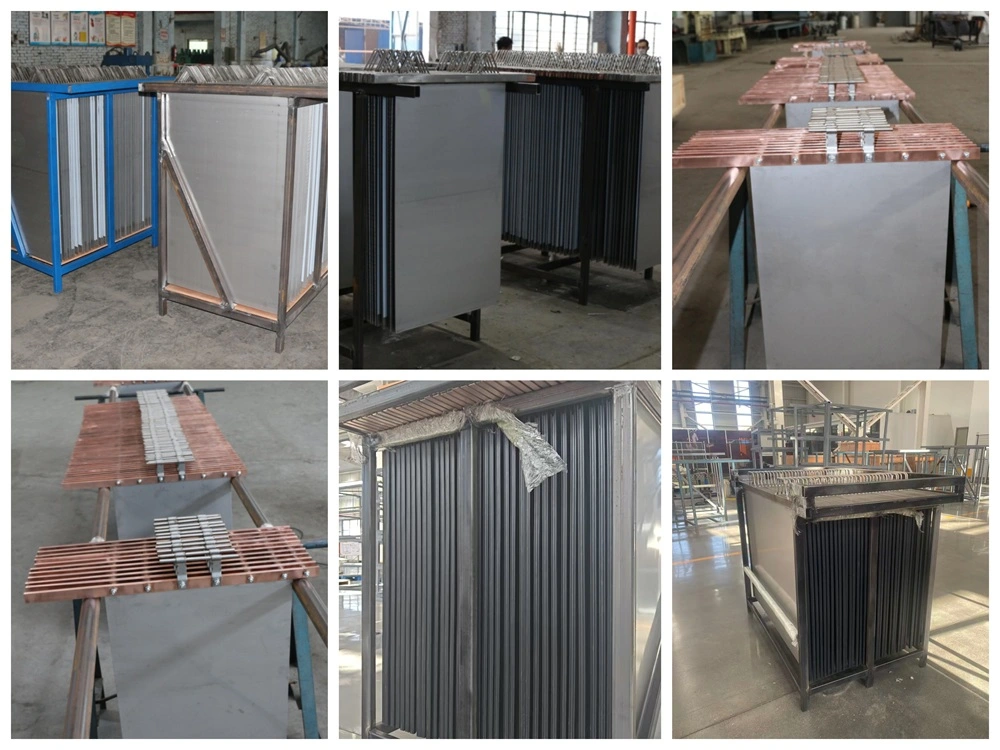
Stainless Steel Cathode Plate
6 Specifications · cathode plate
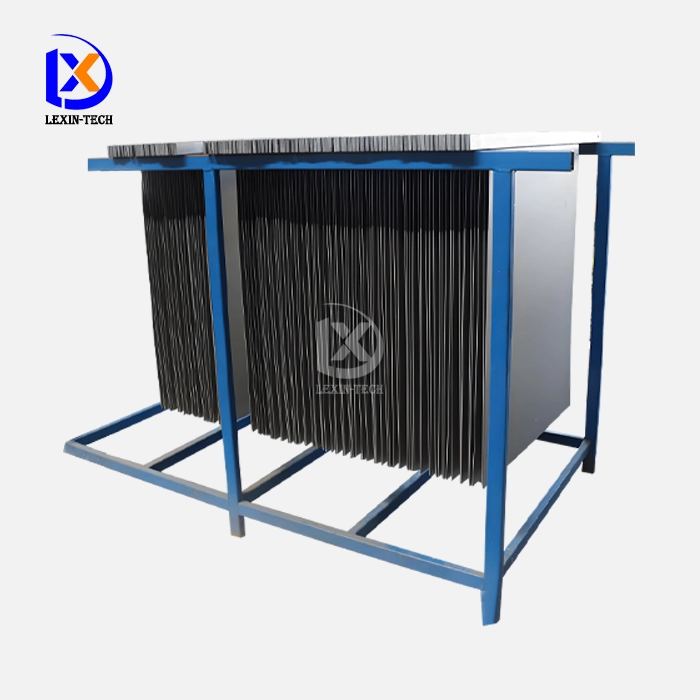
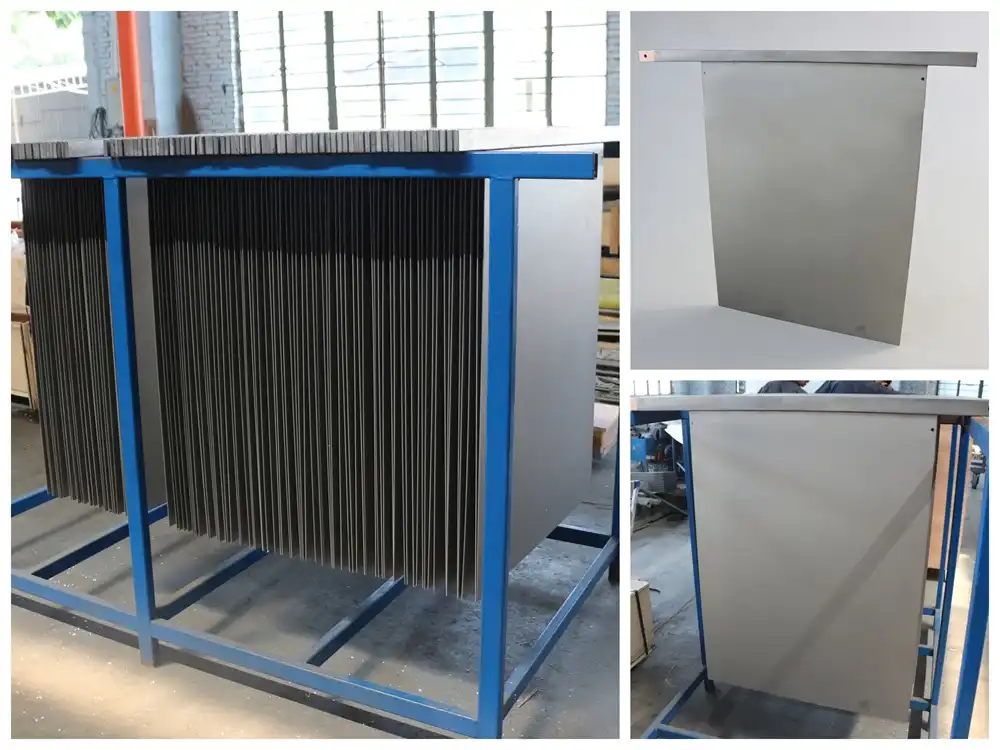
Titanium Cathode Plate
7 Specifications · cathode plate
Further reading
 KBWhat are common surface treatments for stainless steel cathode plates?what-are-common-surface-treatments-for-stainless-steel-cathode-plates
 KBHow to buy small quantities of titanium cathode plates online?how-to-buy-small-quantities-of-titanium-cathode-plates-online
Get this sized against your own material
The calculator returns a pre-feasibility number. For a quotation we need the feed assay, throughput, medium and temperature — and, where the result hinges on it, test data from your own material.
Request a sized quotation Ask an engineer a questionCalculator reference TL-ELECTROWINNING-CURRENT-DENSITY. This tool is provided for preliminary engineering estimates. Final equipment selection must be confirmed against test work on your own material and reviewed by a qualified process engineer.