Mixer-Settler Settler Area and Mixer Volume Calculator
A mixer-settler is sized by two independent numbers: the settler area, which has to allow the dispersion to separate at your flows, and the mixer volume, which has to keep the phases in contact long enough for mass transfer. This calculator gives you both, plus the plan dimensions for a stated length-to-width ratio and a first estimate of the organic inventory sitting in the settlers.
Results
The results appear here and update as you type. Each result is followed by the conditions under which it holds.
How to use it
- Get a settling test first
Shake your actual organic and aqueous together, stop agitation, and time the separation. The specific throughput you enter must come from that test, not from a generic table — phase disengagement behaviour changes with the extractant, the diluent and anything surface-active in the feed.
- Set the O/A ratio from the chemistry
Work out the ratio from the metal mass balance and the organic's loading capacity before you size anything.
- Size the settler from total flow
Total flow is aqueous plus organic. Under-sizing the settler is the classic cause of a circuit that works at bench scale and floods at pilot scale.
- Size the mixer from residence time
Mixer volume follows from total flow and the mixing time you want. Check that the resulting mixing energy density is enough to disperse the phases but not so high that it produces a stable emulsion.
- Allow for the dispersion band
The band is where crud accumulates and where the interface moves when flows vary. Give it depth and give the settler a skimming point.
- Check the organic inventory
Every litre of dispersion holds organic that you have paid for. Reducing band volume cuts inventory but also cuts your tolerance to flow upsets — that trade-off is a design decision, not an accident.
Formulas used
Q_total = Q_aqueous × (1 + O/A)
Settler area A = Q_total / specific throughput
W = sqrt(A / (L:W))            L = W × (L:W)
V_mixer = Q_total × (τ / 60)
V_band = A × band depth
Organic in band = V_band × organic fraction
Assumptions & applicability
- Steady-state design flows. No allowance is made here for flow surges, start-up, or the temporary loss of circulation that a blocked line causes.
- One settler per stage. Recycles and any internal aqueous recycle are not included in the total flow — add them before entering the figures.
- Specific throughput is an input you must supply from your own settling test. It is the single most influential and least certain number in this calculation.
- Settler area is based on plan area only; the effect of internals, picket fences, baffles and weirs on the effective settling area is not modelled.
- Mixer volume includes no freeboard in the main figure; a separate line adds 20%. It also ignores the effect of impeller type on mixing intensity.
- Organic inventory counts the band only. Organic held in the settlers' continuous layer, in the mixers, in pipework and in the crud layer is additional.
FAQ
What specific throughput should I use for a mixer-settler?
For solvent extraction settlers the usual design band is 2 to 5 m³/m²·h, with slower-settling systems at the low end. Treat that as a starting range and not a specification: the correct value comes from a settling test on your own organic and aqueous, because interfacial tension, temperature and any surface-active contamination all change how fast the dispersion separates.
Why does my settler flood even though the area looks adequate?
The most common cause is an effective area much smaller than the plan area — short-circuiting path, a badly placed feed distributor, or a weir arrangement that is not pulling evenly. Crud accumulation at the interface and increased organic viscosity at low temperature are the other frequent causes.
Is a longer mixer residence time always better?
No. Beyond the point where the phases reach equilibrium, extra mixing time buys no additional mass transfer but does break droplets into smaller ones, which slows disengagement and raises entrainment. Find the mixing time at which the outlet concentration stops improving, then allow a modest margin.
Terms used above
Equipment sized with this calculation
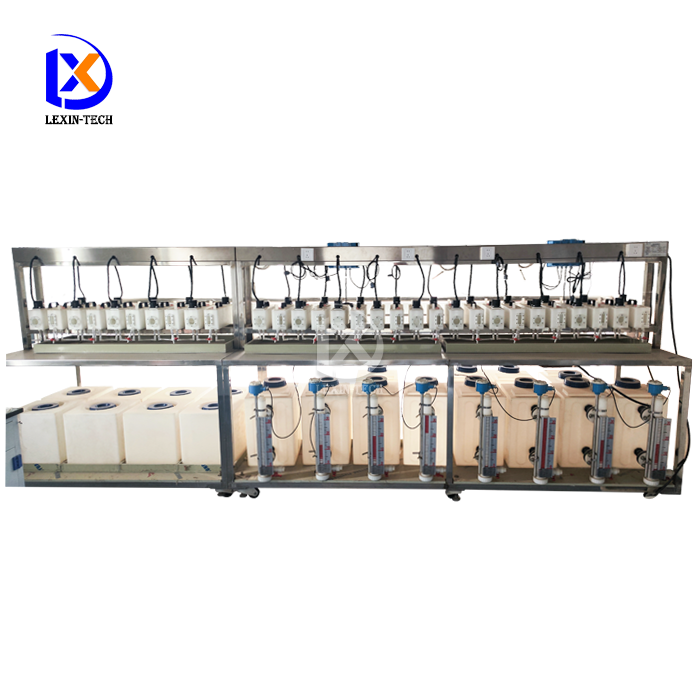
PP Mixer Settler
9 Specifications · mixer settler
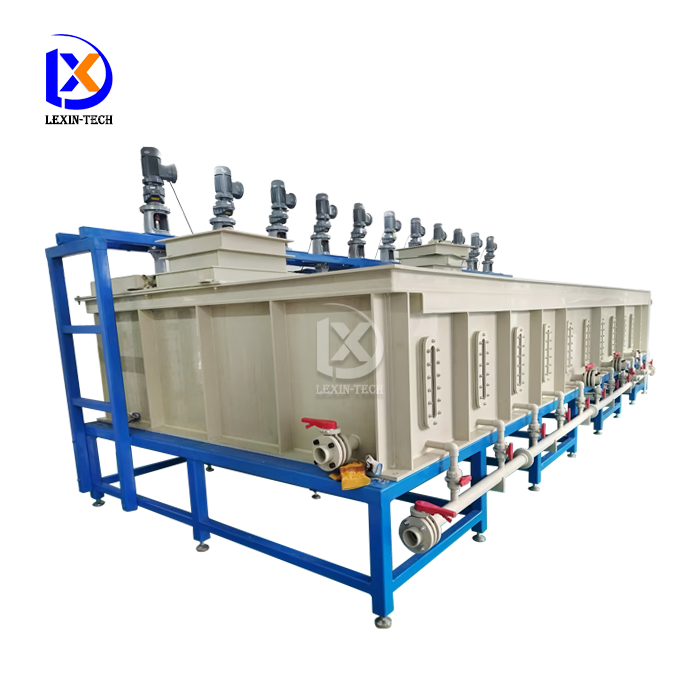
Pilot Scale Mixer Settler
8 Specifications · mixer settler
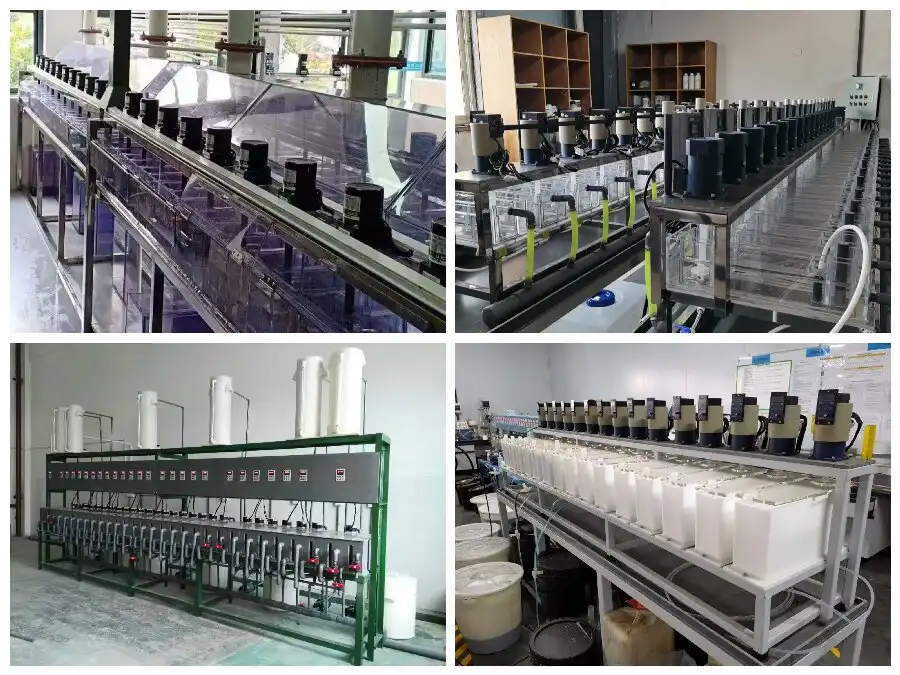
Lab Scale Mixer Settler
8 Specifications · mixer settler
Further reading
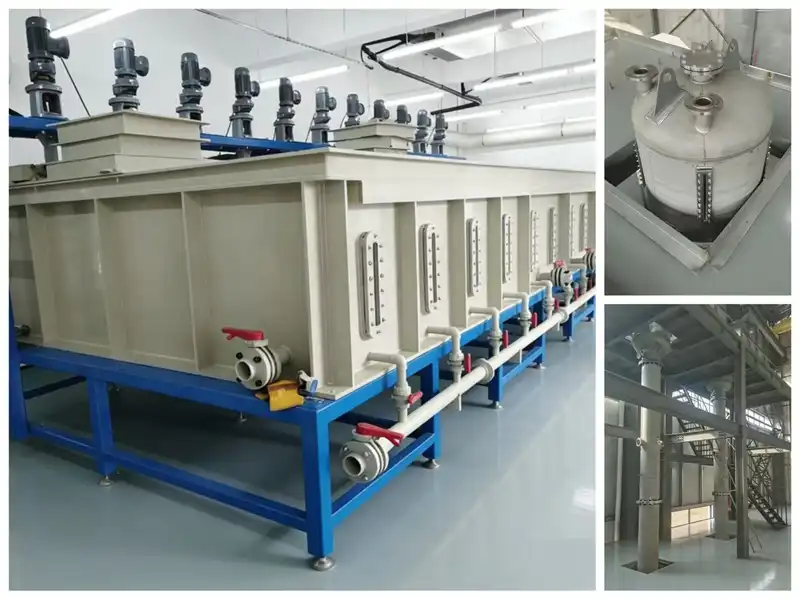 KBMixer-Settler vs Column Extraction: Key Differences Explainedmixer-settler-vs-column-extraction-key-differences-explainedKBCrud Formation in Solvent Extraction: Causes, Prevention and Treatmentcrud-formation-in-solvent-extraction-causes-prevention-treatment
Get this sized against your own material
The calculator returns a pre-feasibility number. For a quotation we need the feed assay, throughput, medium and temperature — and, where the result hinges on it, test data from your own material.
Request a sized quotation Ask an engineer a questionCalculator reference TL-MIXER-SETTLER-SIZING. This tool is provided for preliminary engineering estimates. Final equipment selection must be confirmed against test work on your own material and reviewed by a qualified process engineer.