Crud
also known as rag layer · interfacial gunk · goo
Crud is a mechanically stable dispersion of fine solids — sub-micron silica, iron hydroxide colloids, gypsum fines or organic degradation products — held at the liquid–liquid interface. Because those solids are wetted partially by both phases, they lodge at the boundary instead of reporting to either one, forming a film that physically separates the phases. Crud is distinct from bulk emulsion, which breaks when agitation stops.
Why it matters in practice
Crud degrades every part of a circuit at once: phase disengagement slows, organic inventory balloons because crud traps several times its own volume in organic, entrainment losses rise, and extraction efficiency drifts down. Prevention (clean feed, controlled mixing energy, scheduled organic regeneration) is far cheaper than treatment.
Where this appears on this site
Calculators that use this
Equipment referenced in this entry
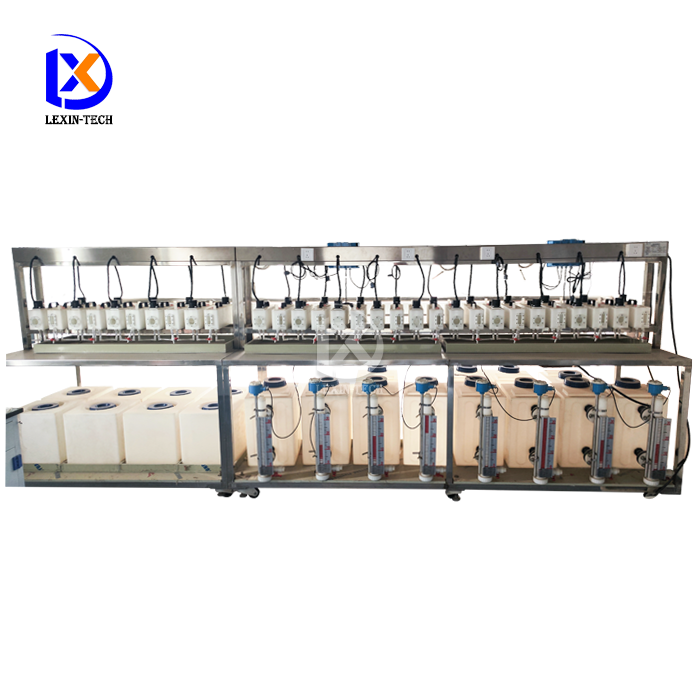
PP Mixer Settler
9 Specifications · mixer settler
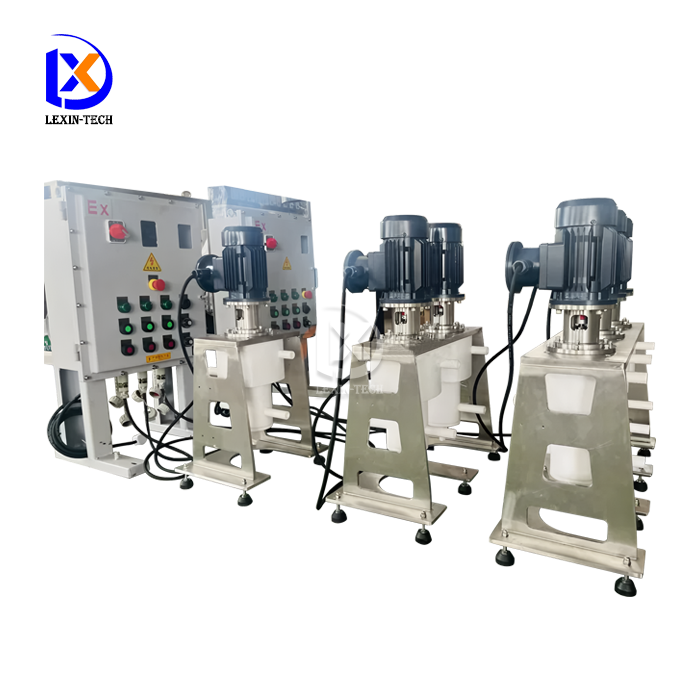
80mm Rotary Drum Centrifugal Extractor
9 Specifications · centrifugal extractor
Related terms
Reference entry GL-CRUD. Definitions on this page describe engineering practice in hydrometallurgical process design; they are not a substitute for test work on your own material.