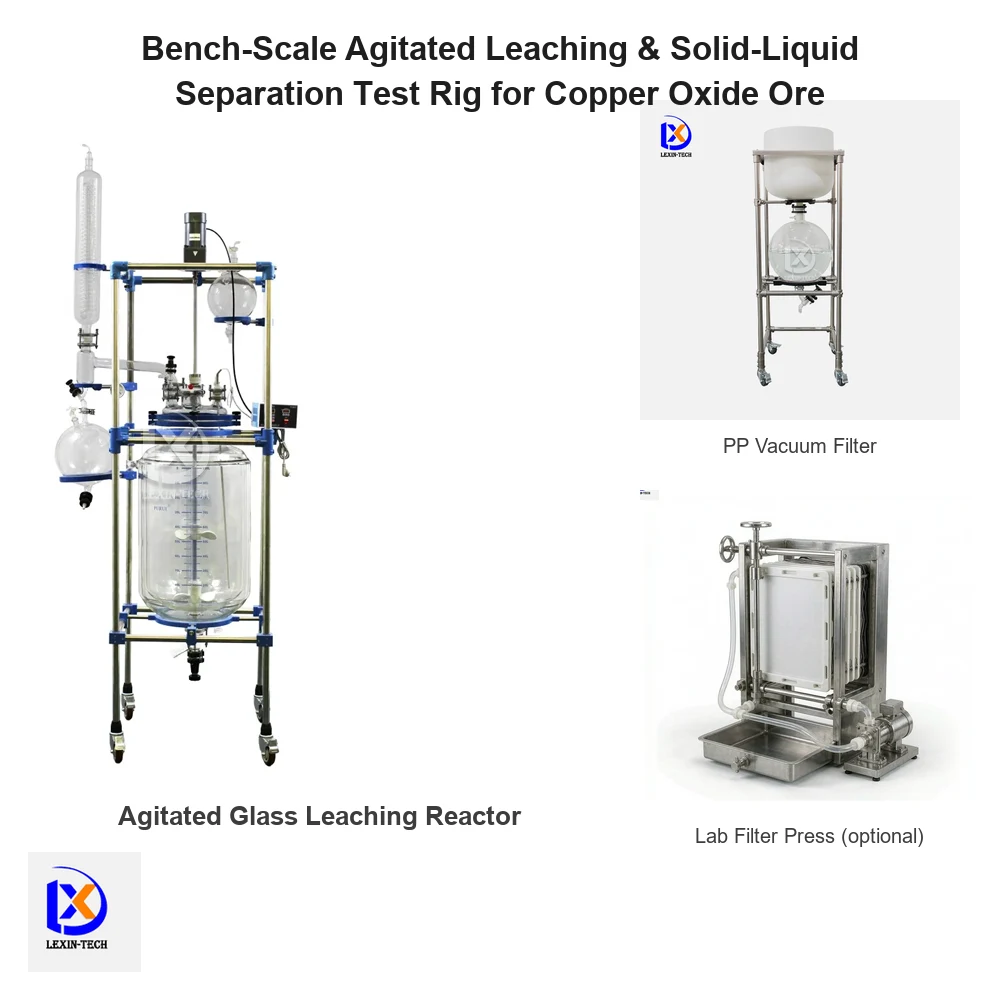
Lab-Scale Agitated Leaching and Solid-Liquid Separation Unit
PriceOn request — quoted against your specification
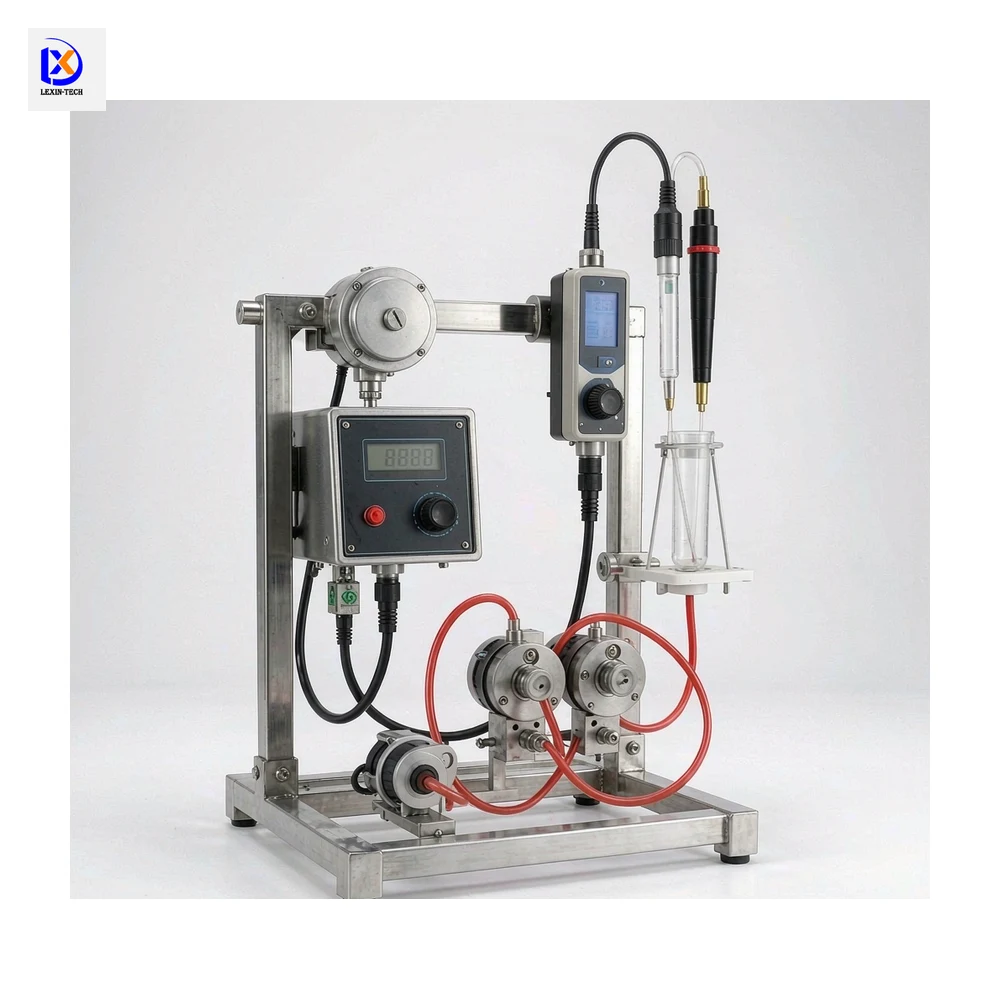
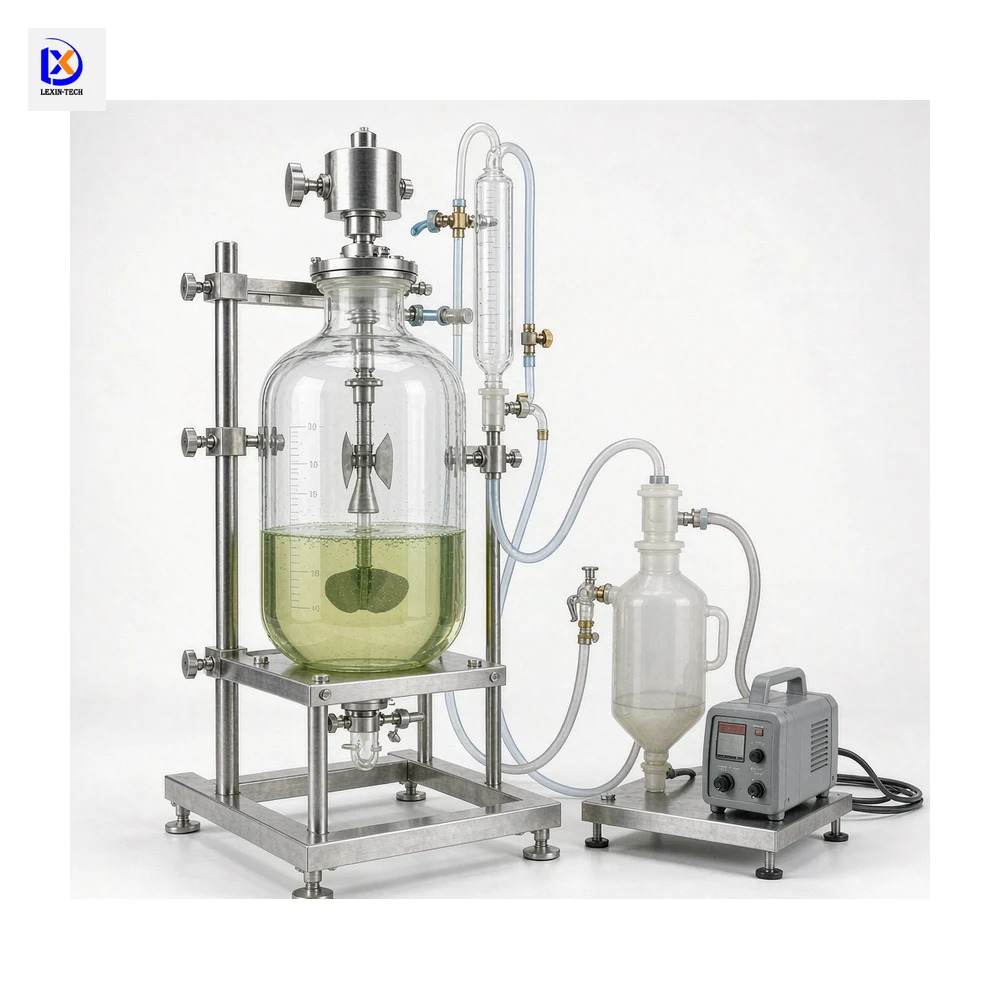
Lab unit combining a 5–20 L glass leach reactor with pH/ORP control and a 240 mm PP vacuum filter — leaching and solid-liquid separation in one skid.
- Built to order
Engineered against your feed assay and throughput - Bench & pilot tested
Sample testing before the flowsheet is frozen - Export documented
Pre-tested, skid-mounted, documented for customs - EN / ES / RU / AR
Technical support in four languages
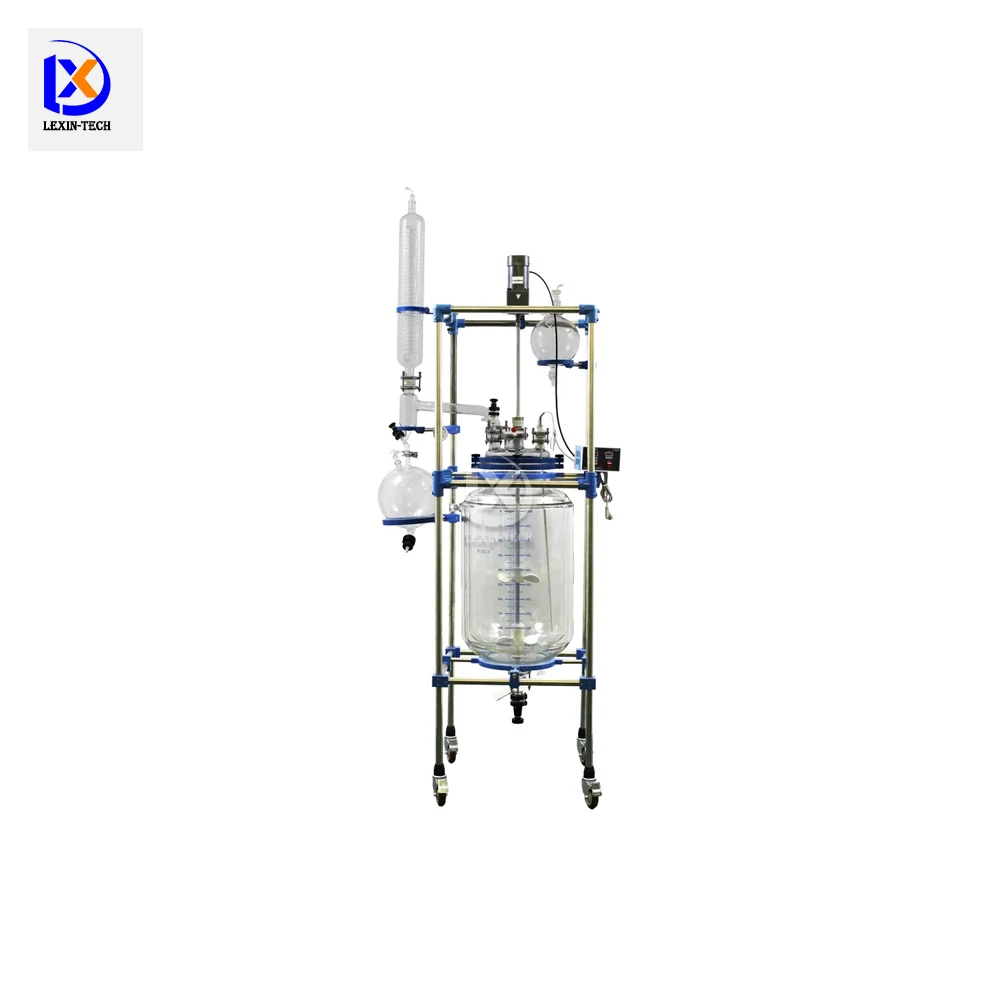
A single skid that combines a 5–20 L agitated glass leach reactor with pH and ORP control and a 240 mm polypropylene vacuum filter — leaching and solid-liquid separation in one unit, so a test can go from slurry to filtrate and cake without a transfer.
Where it fits in the flowsheet
Most bench leach programmes lose time and accuracy in the gap between the reactor and the filter: the slurry is poured, some of it cools, some of it settles, the oxidation state drifts, and the filtration result no longer corresponds to the leach result. Putting the reactor and the filter on one skid with a common frame removes that gap. It is a small idea with a large effect on how comparable two tests are.
Why pH and ORP control are on the same skid
Because in leaching they are the experiment. Acid consumption, and therefore the pH set point, decides how much metal reports to solution; the oxidation-reduction potential decides which oxidation state and therefore which downstream separation works. Controlling both, on the same unit that filters the product, means the recorded conditions belong to the sample that was actually analysed. Uncontrolled, they are a description of what the liquor happened to be doing when someone took a reading.
Reading the specification
- Reactor 5–20 L, agitated, glass — visible, acid-resistant and inert to the liquor. The volume spans screening runs and the larger batches a filtration test needs.
- pH and ORP control — reagent addition on a set point rather than by hand. This is what makes a leach test repeatable and what makes acid consumption a measured figure rather than an estimate.
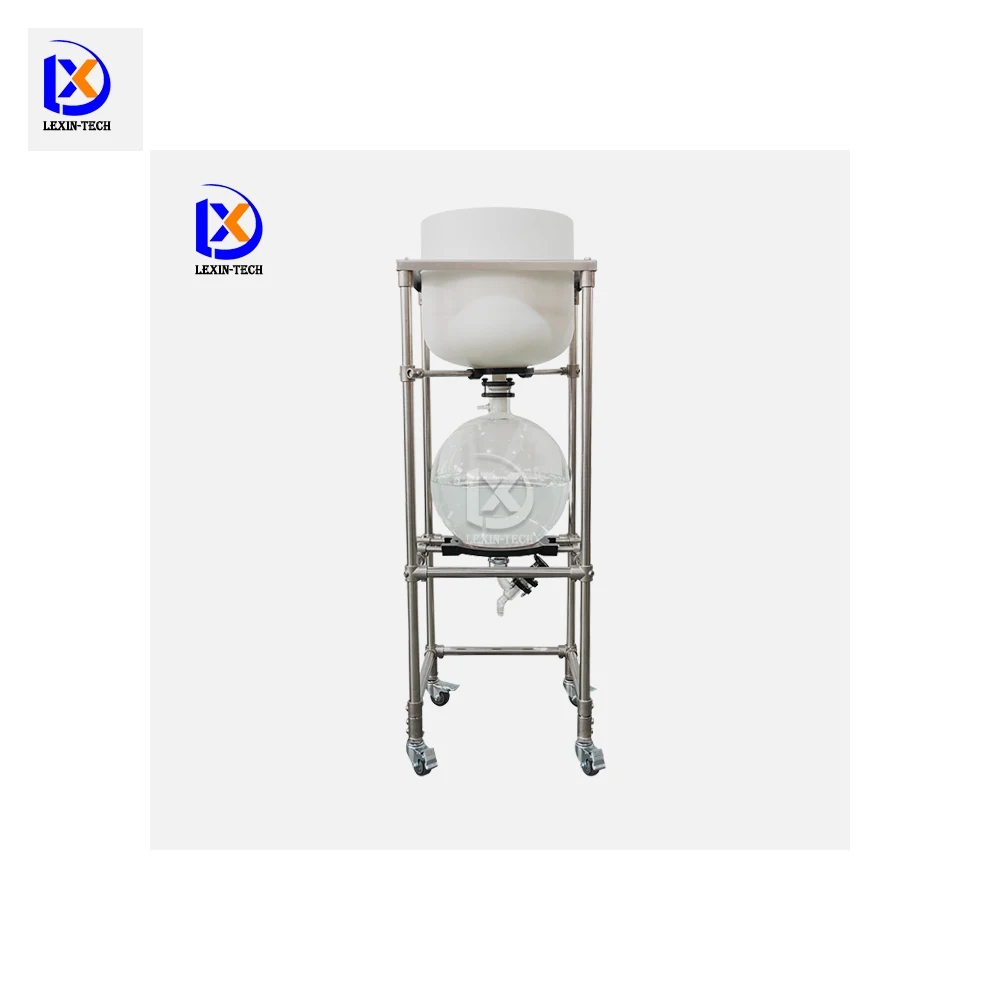
- 240 mm PP vacuum filter — the separation half of the skid: a polypropylene vacuum filter head sized to the reactor volume, so a full batch filters in one pass.
- Single frame — reactor, filter, vacuum and controls on one skid. The point of the product: no transfer, no cooling, no oxidation drift between steps.
Typical duty
Leach optimisation where acid addition and oxidation potential are both variables — sulphide and refractory ore work in particular — and any programme where the filtration step has to be tightly coupled to the leach step to be meaningful.
What to send us
The ore or concentrate type, the leach chemistry, the reagent you intend to control with, and the sample volume per test. The reactor volume, filter diameter and control configuration follow from those — which is why this unit is specified rather than sold from a list.
Specifications
| Reactor Capacity | 5L, 10L, 20L (1L / 3L on request) |
|---|---|
| Kettle Material | GG17 High Borosilicate Glass |
| Temperature Range | Ambient to 95°C (water bath / oil bath heating) |
| Stirring Speed | 0-680 rpm, digital display |
| Stirring Power | 90W (5L), 120W (10L/20L) |
| pH / ORP Monitoring | Online pH (0-14) and ORP probe, pH-stat acid dosing via peristaltic pump |
| Pulp Density | 10-40 wt% solids (to be confirmed by test work) |
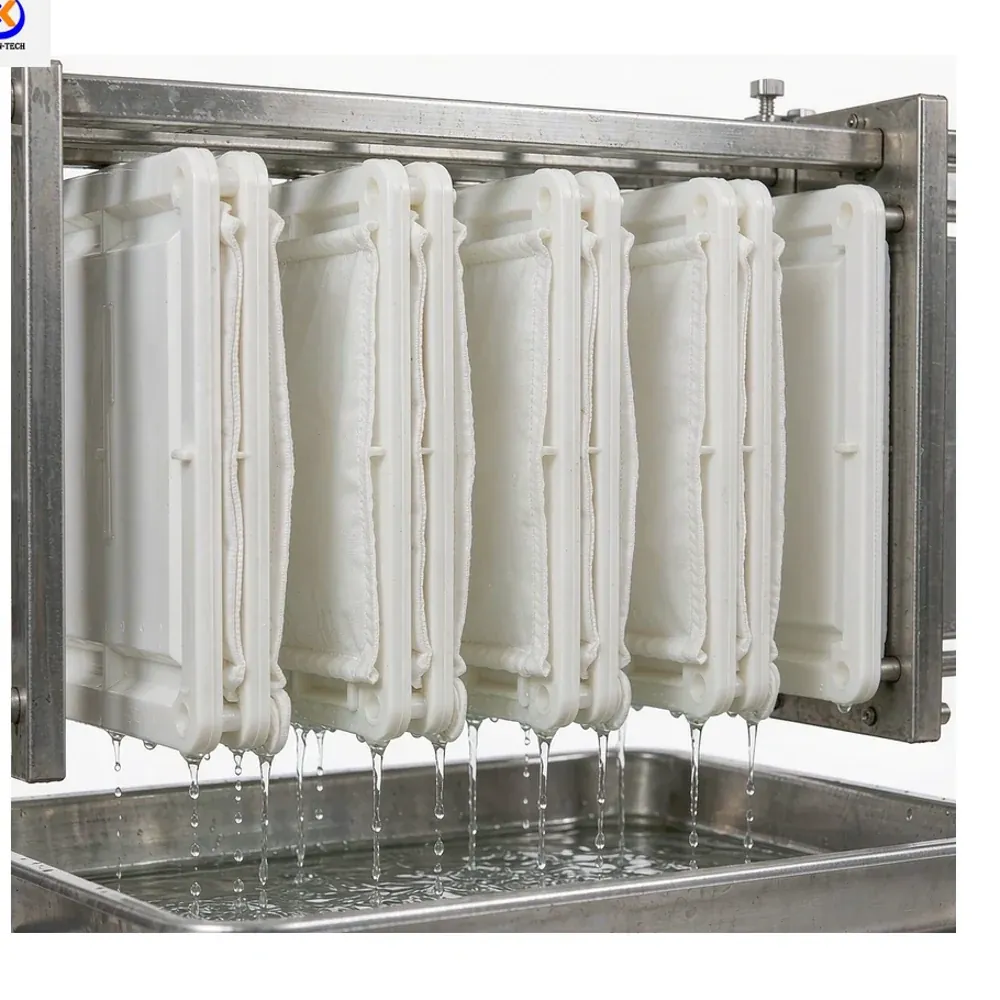
| Solid-Liquid Separation | 240 mm PP vacuum filter with diaphragm vacuum pump (-0.098 MPa); lab-scale plate and frame filter press optional |
| Wetted Materials | Borosilicate glass, PP, PTFE, CPVC — suitable for H2SO4 systems, chloride-free duty |
Values are the documented specifications for this model. Final dimensions are confirmed on the approved drawing before production.
Related products
-
-
-
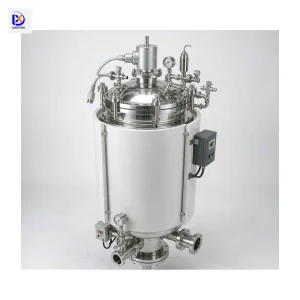
Laboratory Pressure Leaching Autoclave
PriceOn request — quoted against your specification -
