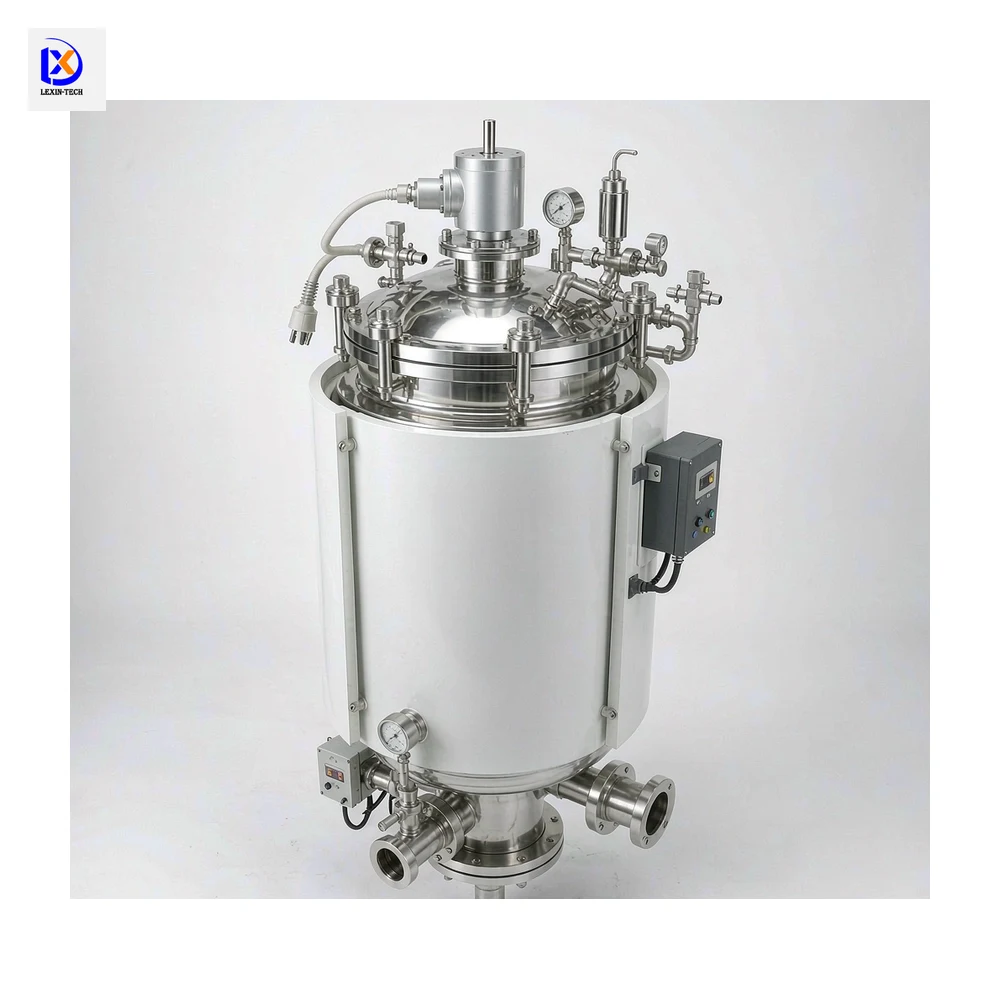
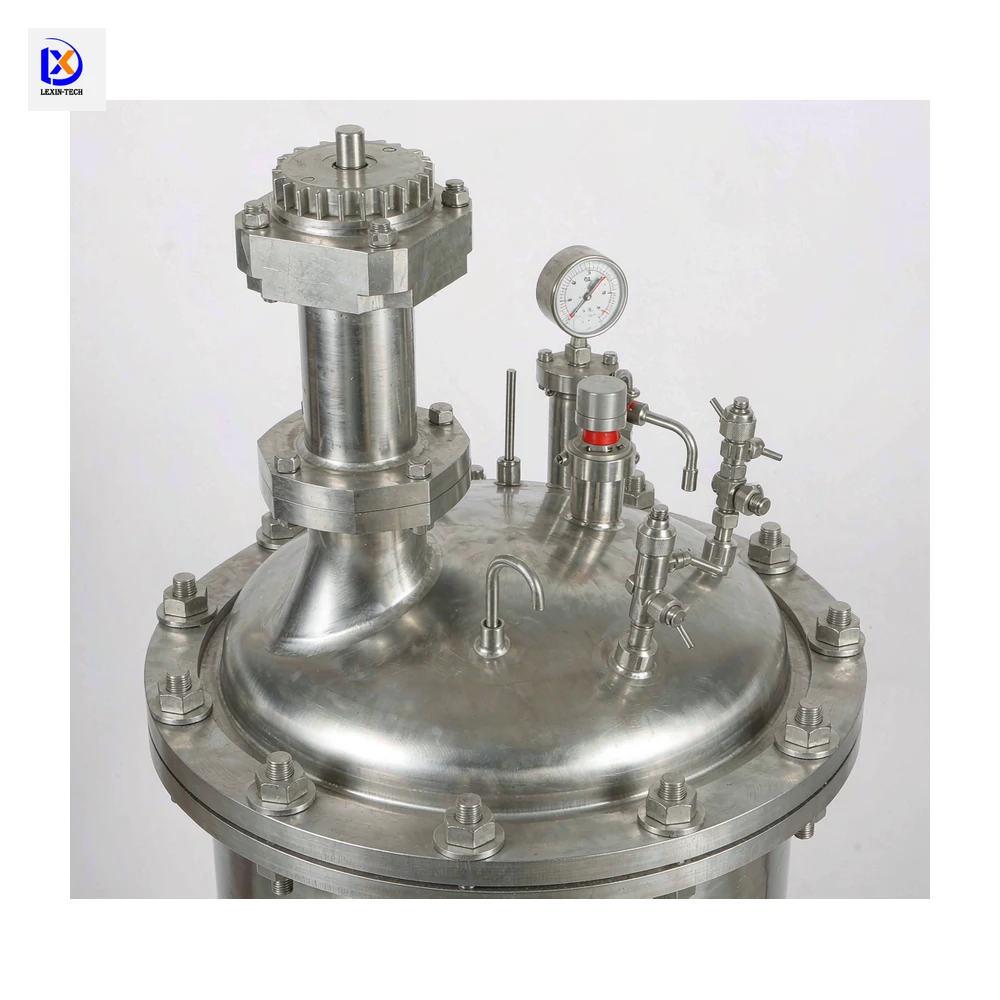
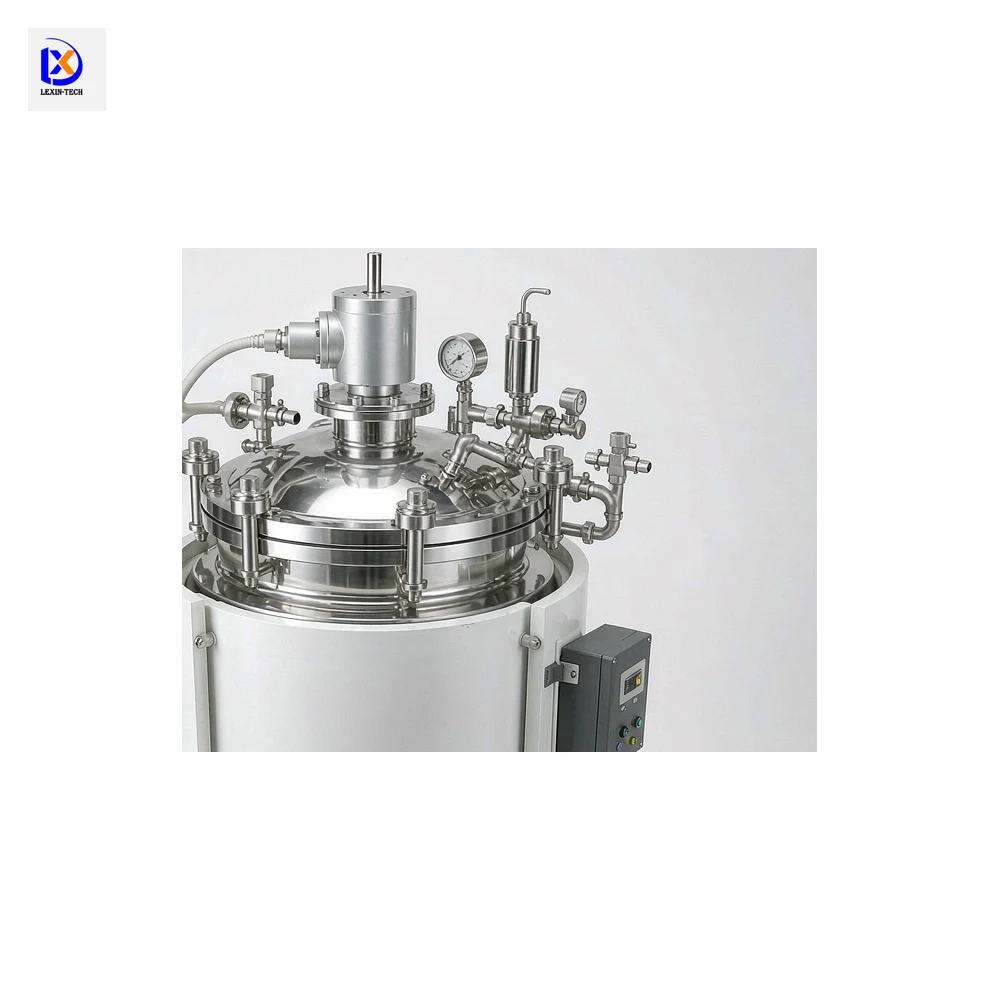
Laboratory Pressure Leaching Autoclave
PriceOn request — quoted against your specification
Laboratory pressure leaching autoclave with agitated, heated and pressure-rated vessel for oxidative leach tests on refractory ores and concentrates.
- Built to order
Engineered against your feed assay and throughput - Bench & pilot tested
Sample testing before the flowsheet is frozen - Export documented
Pre-tested, skid-mounted, documented for customs - EN / ES / RU / AR
Technical support in four languages
A laboratory pressure leaching autoclave runs leach tests above atmospheric pressure and above 100 °C: a sealed, agitated, heated vessel rated for the pressure your chemistry generates, with gas addition where the process needs oxygen.
Where it fits in the flowsheet
Pressure leaching is the answer when atmospheric leaching cannot deliver — refractory sulphides that will not liberate at ambient, laterites that need high acid and high temperature, and any chemistry where oxygen solubility at atmospheric pressure is the limiting factor. The autoclave is where those conditions are first reached, and it is the only bench equipment in a hydrometallurgical laboratory that has to be treated as a pressure system rather than a vessel.
What makes it different from any other bench reactor
Three things. Pressure is a design condition, not an operating detail: the vessel, the head, the seals and the gas addition all have to be rated for it, and the rating is what you are buying. Temperature is above the boiling point of the liquor, so the pressure is generated by the process itself and cannot be vented away casually. And gas addition — oxygen or air — has to be dispersed into a slurry at pressure, which is a mixing problem that a standard agitator does not solve.
Reading the configuration
- Vessel and head rating — the number that defines the product. Specify the maximum working pressure against the maximum temperature you intend, not against the temperature you expect.
- Agitation — gas dispersion into a pulp at pressure. The impeller and the gas sparger are a pair; a good impeller with a poor sparger gives you oxygen in the headspace rather than in the slurry.
- Heating — external or internal, with control that holds the set point rather than overshooting into the pressure limit.
- Materials of construction — high-temperature acid at pressure is a severe combination. Titanium, zirconium or a lined vessel, depending on chloride and oxidant levels; this is not a decision to make by analogy with an atmospheric reactor.
- Safety instrumentation — pressure relief, burst disc, temperature and pressure interlocks, and a head that cannot be opened under pressure. On this equipment these are the product, not accessories.
Typical duty
Oxidative pressure leach tests on refractory sulphide concentrates, high-temperature acid leach on lateritic material, and the kinetic data that decides whether a pressure circuit is worth its capital cost.
What to send us
The chemistry, the maximum temperature and pressure you intend to reach, the gas you will add, the solids loading and the sample volume per test. Also tell us your site’s pressure-vessel requirements, because certification and inspection expectations differ by market and they change the specification.
Specifications
| Working Volume | 2 L and 5 L standard; 10 L pilot sizes on request |
|---|---|
| Vessel Material | 316L stainless steel; titanium or Hastelloy C-276 options for chloride systems |
| Design Code | Designed and fabricated per ASME VIII Div.1 or GB/T 150; material certificates and hydrostatic test report supplied with each vessel |
| Design Pressure and Temperature | Up to 5 MPa class (final rating to be confirmed by test work and order); max 250 deg C with electric heating jacket |
| Agitation | Top-mounted magnetic drive agitator, anchor plus turbine impeller combination, 0-600 rpm variable speed |
| Safety Devices | Bourdon tube pressure gauge and safety relief / rupture disc assembly with vent piping |
| Heating Options | Electric heating jacket around vessel body with digital PID temperature controller and thermowell probe |
| Sampling and Discharge | Bottom drain valve with dip-tube sampling port for in-process slurry sampling |
| Applicable Systems | Pressure oxidation and acid pressure leaching of sulfide concentrates and ore pulps (Cu, Ni, Co, Zn, PGM); oxygen or air sparging optional |
| Wetted Materials | 316L suitable for H2SO4 |
Values are the documented specifications for this model. Final dimensions are confirmed on the approved drawing before production.
Related products
-
-
-
-
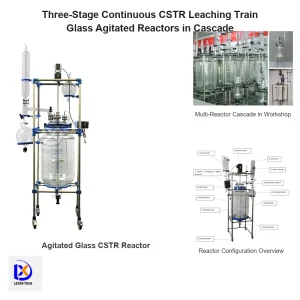
Three-Stage Continuous CSTR Leaching Train
PriceOn request — quoted against your specification