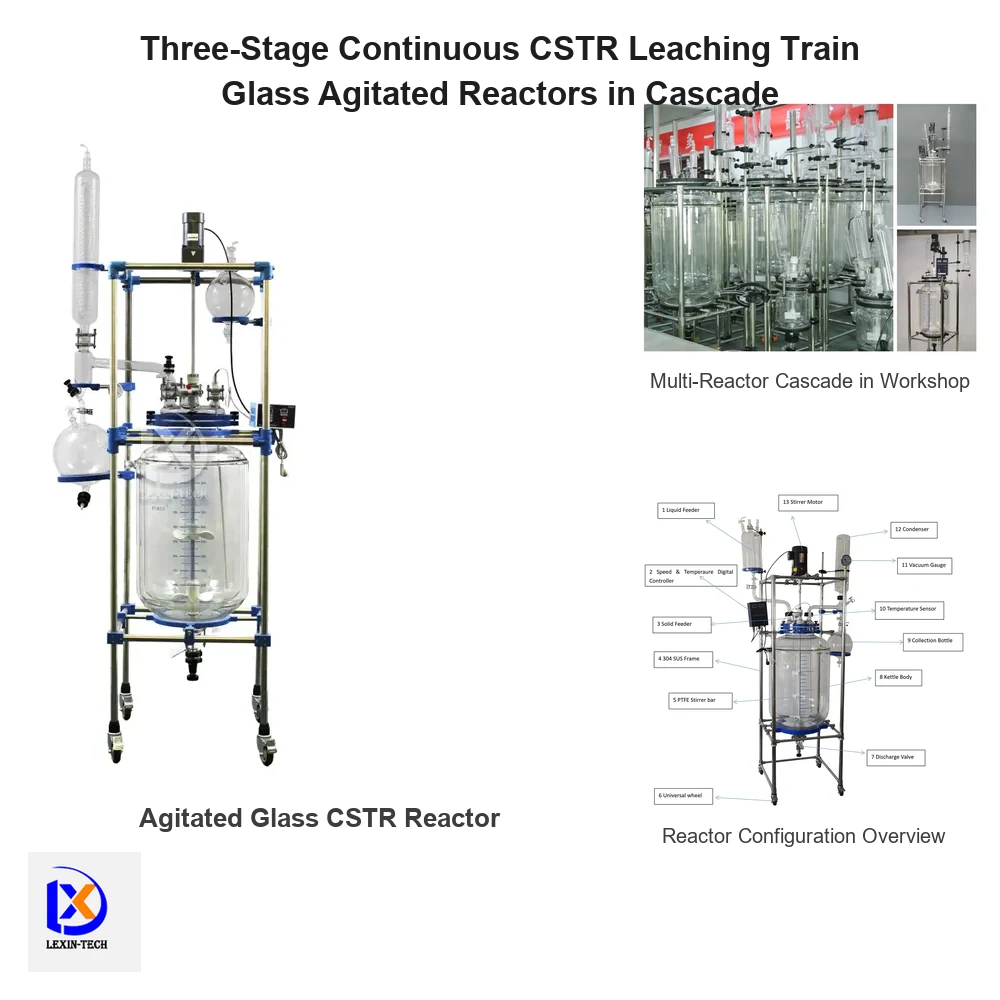
Three-Stage Continuous CSTR Leaching Train
PriceOn request — quoted against your specification
Three-stage continuous CSTR leaching train: cascaded agitated reactors for residence-time distribution, staged acid addition and continuous leach testing.
- Built to order
Engineered against your feed assay and throughput - Bench & pilot tested
Sample testing before the flowsheet is frozen - Export documented
Pre-tested, skid-mounted, documented for customs - EN / ES / RU / AR
Technical support in four languages
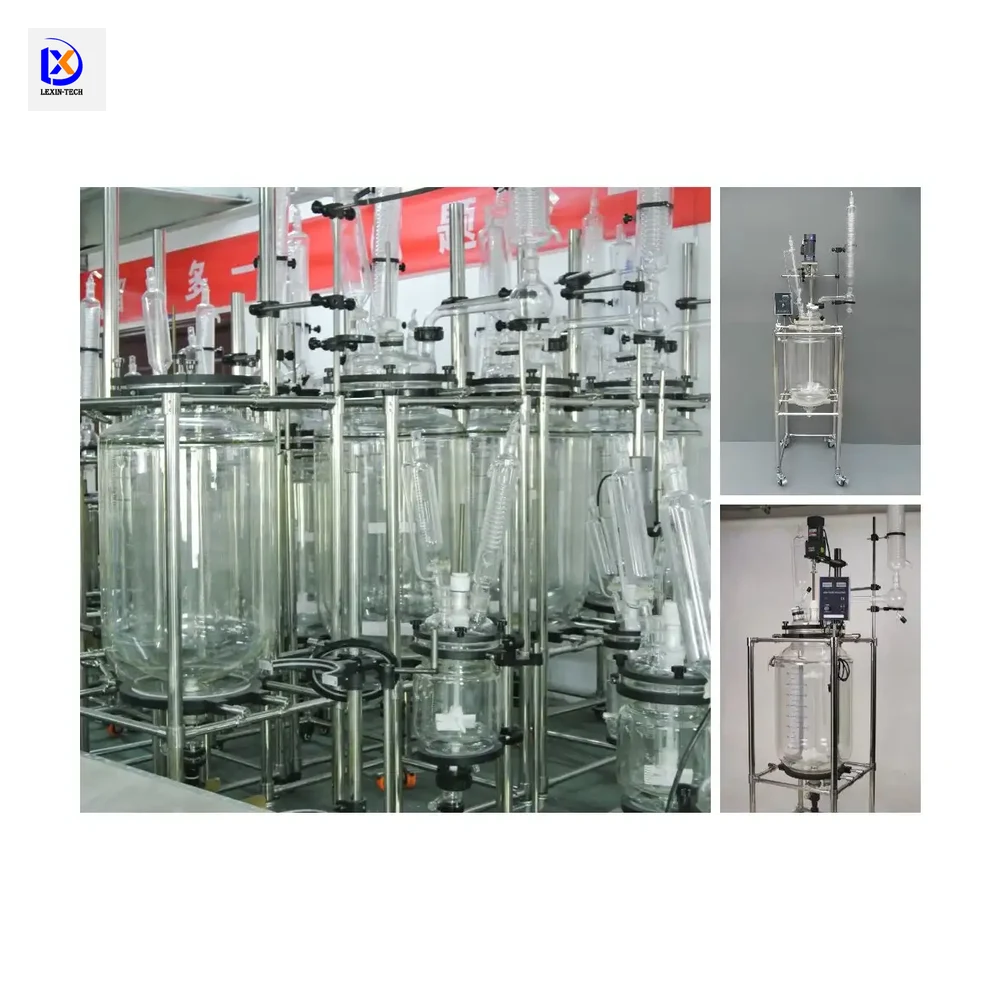
A three-stage continuous CSTR leaching train cascades three agitated reactors in series, with slurry flowing from one to the next, so that the leach runs continuously at a controlled residence time instead of in batches that have to be stitched together afterwards.
Where it fits in the flowsheet
Batch leaching tells you the equilibrium; a continuous train tells you the plant. Three stirred tanks in series approximate plug flow without the mechanical problems of a real plug-flow reactor, which is why they are the standard model for leach circuits. The train is where you discover that the first tank consumes most of the acid, that the third tank is doing very little, and that the residence time distribution is nothing like the batch curve suggests.
What three stages buy over one
Distribution. A single CSTR has a wide residence-time spread, so a fraction of the slurry short-circuits and a fraction overstays; three in series narrow that spread substantially, which means the product quality is more uniform and the recovery curve is more predictable. Three stages also let you stage the reagent: acid added to the first tank for dissolution, to the second for pH trim, to the third for the condition the downstream separation needs.
Reading the configuration
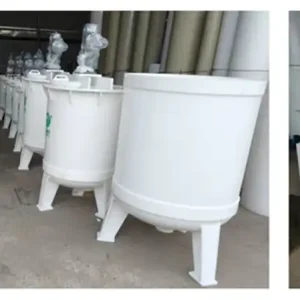
- Three cascaded reactors — the stage count is the design variable. Adding a fourth narrows distribution further at diminishing return; the right number comes from your kinetic curve, not from convention.
- Interstage transfer — the pump or gravity arrangement between tanks is where continuous trains fail. It has to handle pulp without a valve seat to clog and without a pump that airlocks.
- Agitation per stage — solids suspension at the residence time you need. The first tank sees the highest reagent concentration and often needs the most power.
- Residence time control — flow measurement on the feed and level control on each tank. Without both, the residence time is an assumption rather than a set point.
- Materials — the train sees progressively changing chemistry, so specify each stage against what it actually contains, not against the feed.
Typical duty
Continuous leach piloting ahead of a feasibility study, staged acid or oxidant addition studies, and any programme where the residence-time distribution rather than the equilibrium is the open question.
What to send us
The kinetics from batch tests, the target throughput, the reagent addition strategy and the solids characteristics. Stage volume and interstage transfer follow from those — a train sized without the kinetic curve is a guess with three tanks attached.
Specifications
| Number of Stages | 3 agitated glass reactors in series (2-5 stages configurable) |
|---|---|
| Reactor Capacity | 5 L, 10 L, 20 L, 50 L per stage |
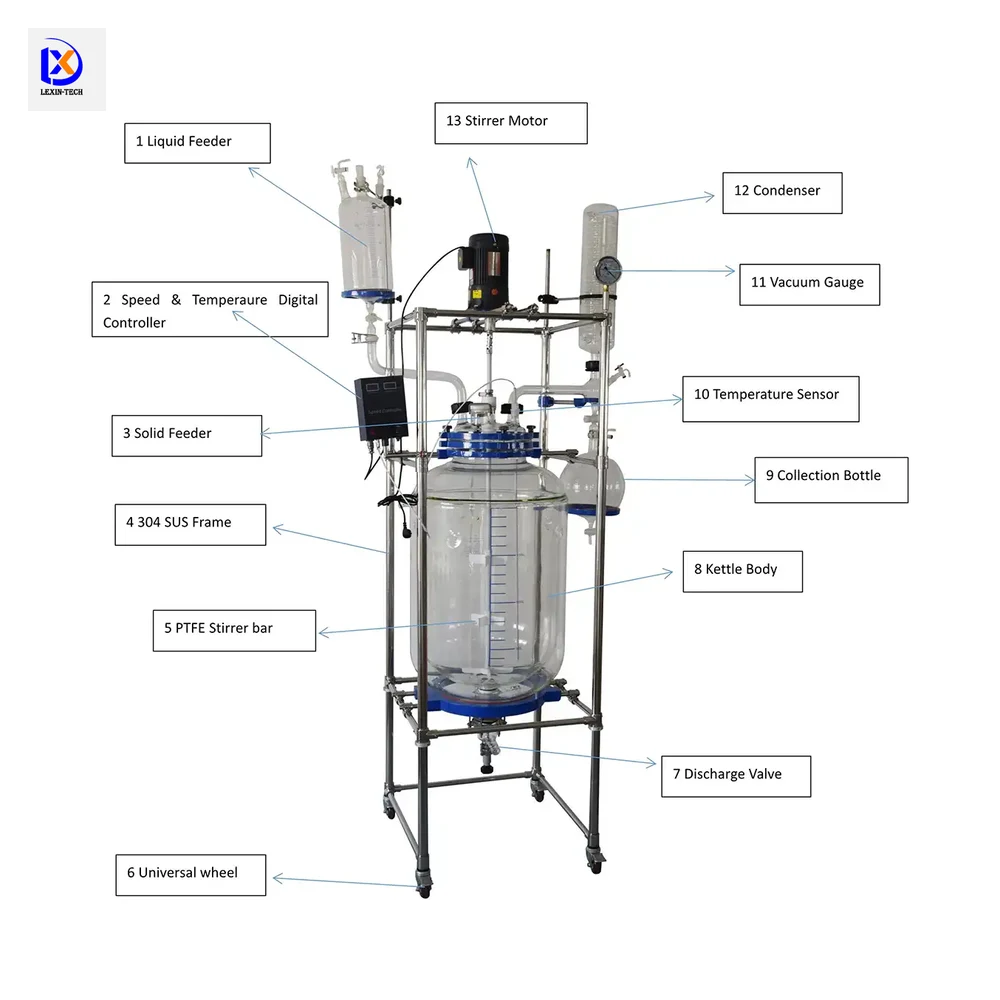
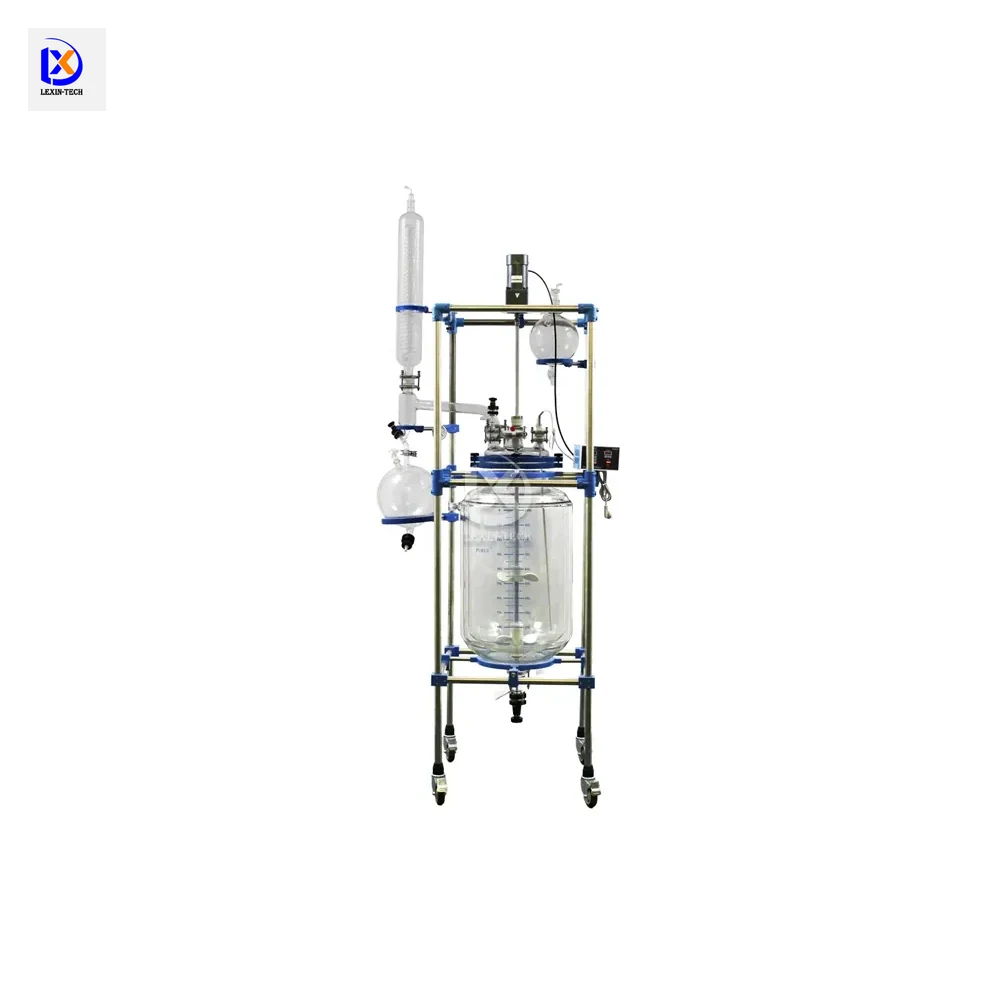
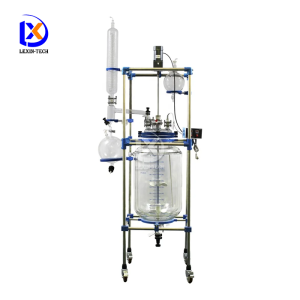
| Kettle Material | GG17 borosilicate glass kettle, PTFE wetted internals, 304 stainless steel support frame |
| Agitation | Per-stage mechanical stirrer with PTFE impeller, 0-600 rpm digital speed control |
| Interstage Transfer | Gravity overflow cascade or peristaltic interstage pumps, back-mixing prevention design |
| Residence Time Control | Per-stage feed and overflow control, nominal total residence 0.5-8 h (to be confirmed by test work) |
| Temperature Range | Ambient to 100 deg C (jacketed or oil-bath heating optional) |
| Instrumentation | Per-stage temperature sensor; optional pH / ORP probes; speed & temperature digital controller |
| Feed System | Liquid and solid feeders per stage; condenser and vacuum assist on reactor head |
| Applicable Systems | Continuous acidic agitation leaching of copper oxide ores and secondary resources; H2SO4 |
Values are the documented specifications for this model. Final dimensions are confirmed on the approved drawing before production.
Related products
-
-
-
-
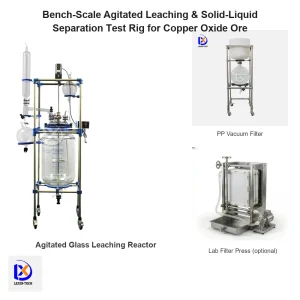
Lab-Scale Agitated Leaching and Solid-Liquid Separation Unit
PriceOn request — quoted against your specification