Lab-Scale Rotary Drum Vacuum Filter
PriceOn request — quoted against your specification
Lab rotary drum vacuum filter, 300–500 mm drum, 0.3–1.0 m2 cloth, 316L agitated trough, doctor blade, vacuum to -0.07 MPa — for filtration and wash trials.
- Built to order
Engineered against your feed assay and throughput - Bench & pilot tested
Sample testing before the flowsheet is frozen - Export documented
Pre-tested, skid-mounted, documented for customs - EN / ES / RU / AR
Technical support in four languages
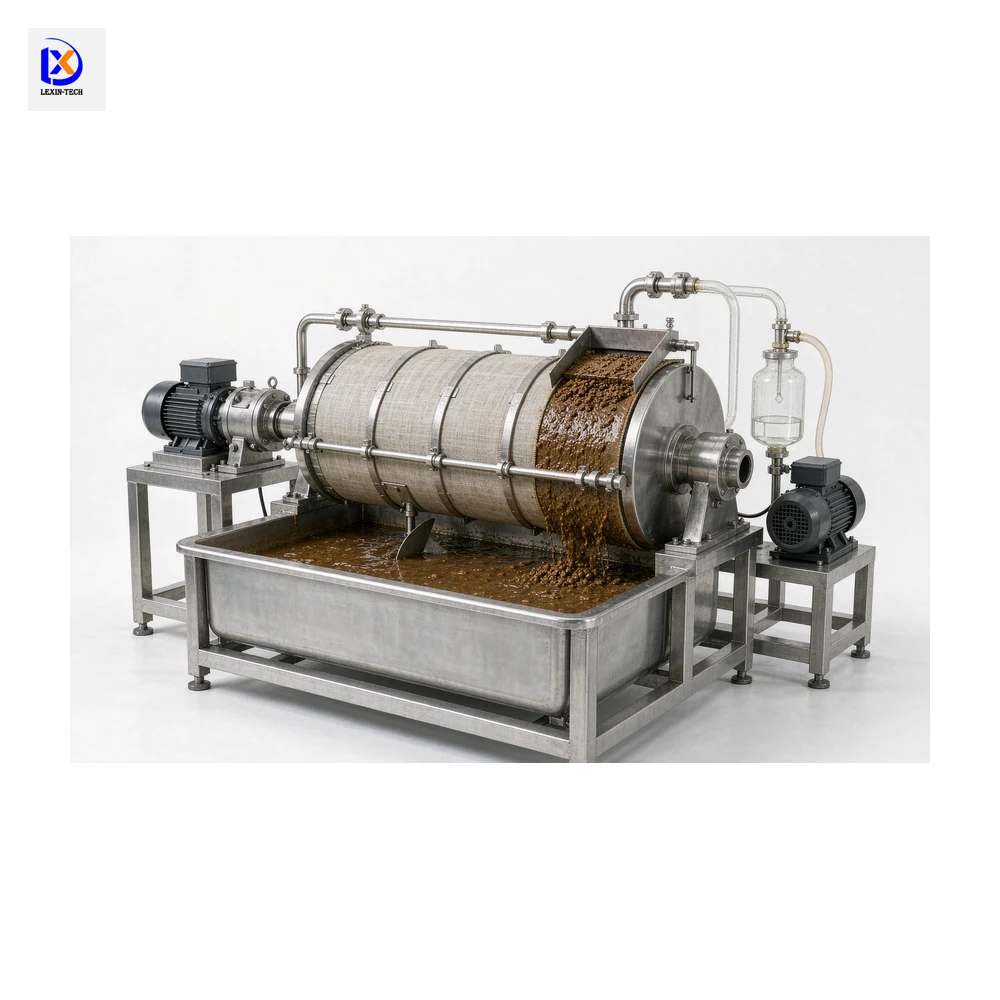
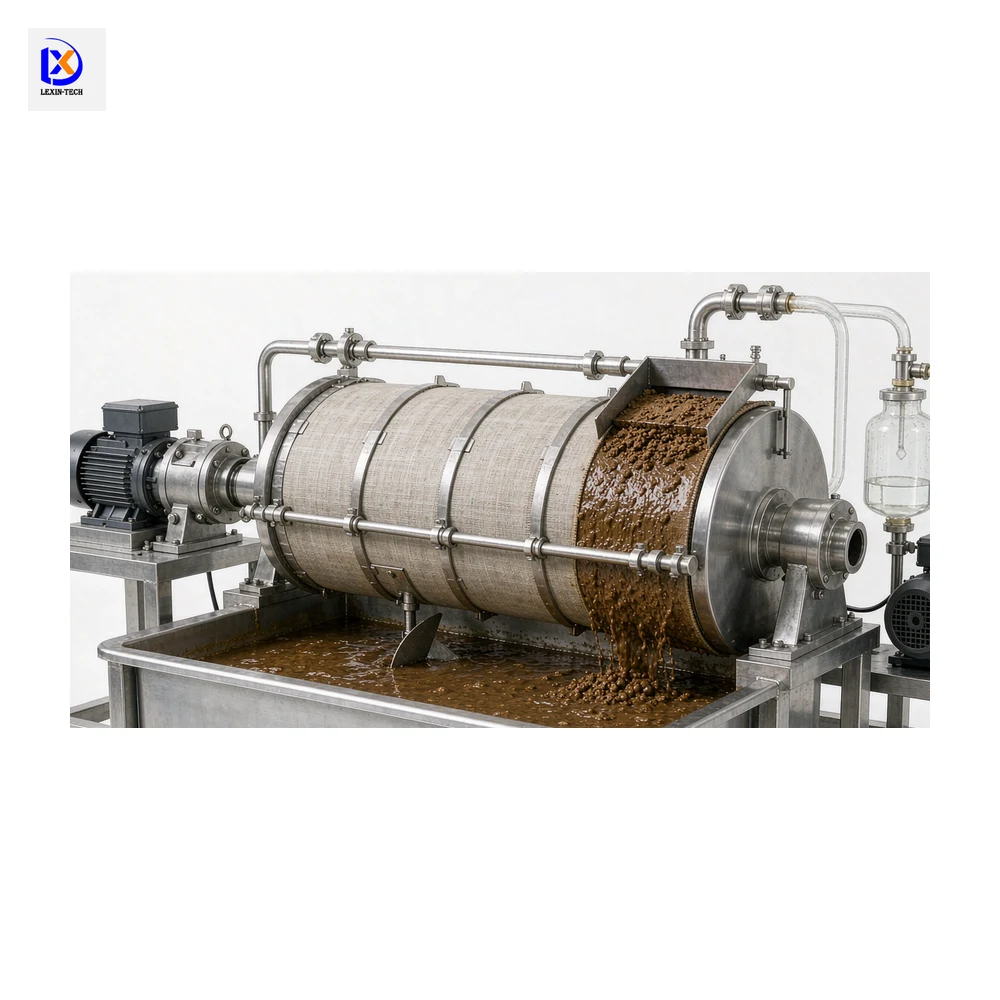
A lab rotary drum vacuum filter is the bench-scale version of the continuous filter that will actually be installed: a 300–500 mm cloth-covered drum turning at 0.5–5 rpm in a 316L trough, with vacuum pulled through the cake and a doctor blade taking it off. It returns filtration rate, cake moisture, wash ratio and cloth performance on real leach pulp, not a Buchner approximation of it.
Why a drum rather than a Buchner funnel
A Buchner test tells you how a slurry filters under a fixed pressure. It does not tell you what happens when the cake is continuously formed, dewatered, washed and discharged on a moving surface — and those four steps are where industrial filter sizing usually goes wrong. On a drum, submergence, drum speed and vacuum can be varied independently while cake thickness, moisture and wash displacement respond. That is the difference between a number and a design.
What the four variables do
Drum speed sets cake thickness: a faster drum gives a thinner cake, higher rate and wetter discharge. Submergence sets the forming time available at that speed. Vacuum — down to about −0.07 MPa in this build — sets the driving force and therefore the moisture at the discharge point. Wash application after the cake forms sets the wash ratio, and the divided cloth sections with wire winding are what allow the cake to be lifted, washed and dried in sequence without the cloth lifting off the drum.
Reading the specification
- Drum diameter — 300–500 mm pilot sizes, confirmed against the test programme. Cloth area follows from it, roughly 0.3–1.0 m².
- Drum — 316L stainless with divided filter cloth sections and wire winding; the divisions are what make multi-stage washing on one drum possible.
- Slurry trough — 316L pan with a paddle agitator. Without agitation the pulp classifies in the trough and the cake stops representing the feed.
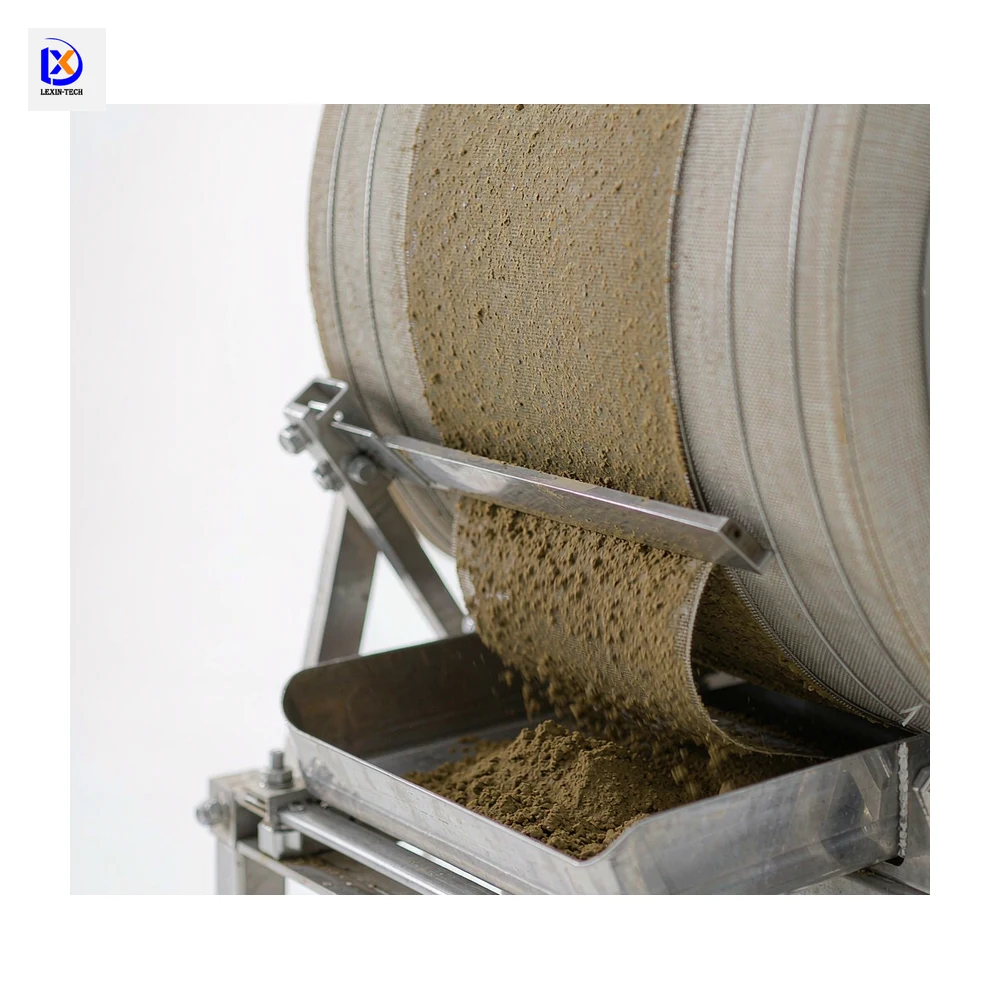
- Cake discharge — adjustable stainless scraper (doctor blade) with discharge chute. Blade clearance is a setting, not a dimension: too tight cuts cloth, too loose leaves the cake on the drum.
- Vacuum system — filtrate receiver flask with pump connection, to about −0.07 MPa. Adequate for mineral pulps; not a substitute for a full vacuum station on difficult slimes.
- Drive — geared motor, 0.5–5 rpm variable. The low end matters: some flocculated pulps need a slow drum to build a cake that will release.
Typical duty
Sizing and cloth selection for drum, belt and pan filters on leach pulp: filtration rate per square metre, cake moisture at discharge, wash ratio for soluble loss, and the effect of flocculant on all three. It is also the fastest way to show that a pulp which filters badly on a Buchner will filter acceptably with the right cloth and the right submergence.
Neutral and mildly corrosive pulps run in the standard 316L build. Strong acid or high chloride duty requires upgraded wetted materials — send the liquor analysis and we will specify before quoting.
Specifications
| Drum Diameter | 300 - 500 mm pilot sizes (to be confirmed by test work) |
|---|---|
| Filtration Area | Approx. 0.3 - 1.0 m2 cloth-covered drum surface |
| Drum Material | 316L stainless steel drum with divided filter cloth sections and wire winding |
| Slurry Trough | 316L stainless steel pan with paddle agitator to keep pulp suspended |
| Cake Discharge | Adjustable stainless steel scraper knife (doctor blade) with discharge chute |
| Vacuum System | Filtrate receiver flask and vacuum pump connection, operating down to approx. -0.07 MPa |
| Drive | Geared motor with variable drum speed 0.5 - 5 rpm (to be confirmed by test work) |
| Applicable Systems | Continuous vacuum filtration and cake washing test work on mineral leach pulps |
| Applicable Systems | Neutral to mildly corrosive slurries; strongly acidic or chloride-bearing pulps require upgraded wetted materials (to be confirmed by test work) |
Values are the documented specifications for this model. Final dimensions are confirmed on the approved drawing before production.
Related products
-
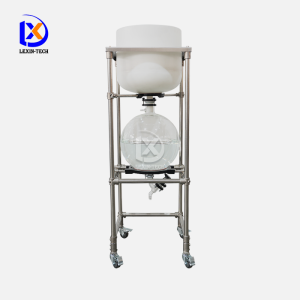
Laboratory Scale Polypropylene PP Vacuum Filter
PriceOn request — quoted against your specification -

-
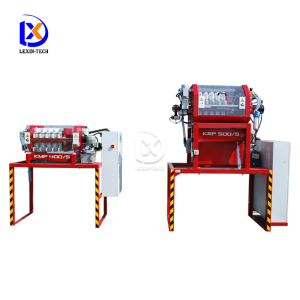
Pilot-Scale Plate and Frame Filter Presses
PriceOn request — quoted against your specification -