Centrifuges

Laboratory disc-stack centrifuges for clarification and pilot decanter centrifuges for high-solids slurries: bowl 230–350 mm, 2,800–3,500 ×g, 0.5–5 m³/h.

A centrifuge separates by density difference at high acceleration, which is why it handles the two jobs a filter cannot: clarifying a liquor that carries almost no solids, and dewatering a slurry that will not form a cake. This range covers a laboratory disc-stack unit for clarification and a pilot decanter for high-solids duty.

What the range covers

UnitBowlSpeedThroughputDuty
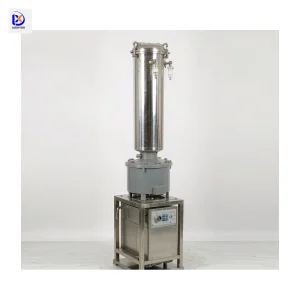
Laboratory Disc-Stack Centrifuge230–260 mm7,700–13,500 rpmBench scaleClarifying SX electrolytes, leach liquors and wash water
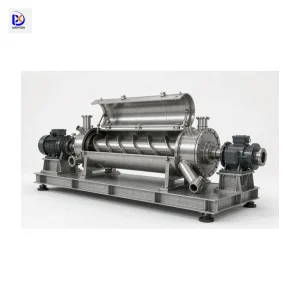
Pilot-Scale Decanter Centrifuge250–350 mm3,200–5,000 rpm (2,800–3,500 ×g)0.5–5 m³/hSludges and high-solids slurries, continuous discharge

Disc-stack or decanter

Disc-stack for the liquid, decanter for the solid. A disc-stack machine is a clarifier: it removes a small amount of fine solids from a large volume of liquor, which is exactly the crud problem in solvent extraction and the haze problem in electrolyte. A decanter is a dewaterer: it takes a slurry with real solids content and discharges a spadeable cake continuously.

Ask what the downstream unit can tolerate. Electrowinning needs a clean electrolyte; entrained organics and fine solids both cost current efficiency and cathode quality. A disc-stack in the electrolyte loop is often cheaper than the cathode rejects it prevents.

Ask what the upstream upset looks like. Decanters tolerate slugs that would blind a filter cloth, which is why they end up on residue and tailings duty where the feed is never quite what the flowsheet says.

Selection notes

×g matters more than rpm. The separating force scales with bowl diameter and the square of speed, so a smaller bowl at higher speed can outperform a larger slow one on fine solids. Compare units at equal ×g, not equal rpm.

Throughput is a function of solids, not volume. A decanter rated at 5 m³/h on a dilute slurry will not do 5 m³/h on a thick one. Always state the feed solids with the throughput number.

Flocculant changes the answer. On slimes, a decanter with the right flocculant dose can beat a filter press on both cake dryness and operability; without it, neither machine performs.

Common questions

Can a centrifuge replace a filter press?

For fine, compressible or slimy solids, often yes — and it usually gives a drier cake. For large, free-filtering solids, a press or a belt is cheaper per tonne. Pilot data on your own slurry decides it.

Why clarify electrolyte at all?

Fine solids and carried-over organic both deposit on the cathode and raise cell voltage. Clarification is a current-efficiency measure as much as a cleanliness one.

Operating notes that decide the running cost

Balance is not optional. A disc-stack at 13,500 rpm will destroy itself on an unbalanced bowl load. Solids must be flushed before shutdown on every cycle, not at the end of the campaign.

Flocculant and centrifuges interact. On a decanter, the right polymer raises throughput and cake dryness together. On a disc-stack, polymer is usually counterproductive because it changes the sludge rheology the discs were sized for.

Wear parts set the maintenance budget. Scroll flights, bearings and seals are consumables. Ask for the wear-part list with the quotation, not after the first overhaul.

Throughput falls as solids rise. Size the machine for the worst feed you expect, not the design feed — decanters are usually bought for the upset case anyway.

Prices are quoted per project — every unit is sized for your duty. The first reply carries a budget band and a lead time, within one business day.

Showing all 2 results

  • Laboratory Disc-Stack Centrifuge

    Laboratory Disc-Stack Centrifuge

    PriceOn request

    Laboratory disc-stack centrifuge for clarifying solvent-extraction electrolytes, leach liquors and wash water: 230–260 mm bowl, 7,700–13,500 rpm, 10,000–20,000 ×g, 50–200 L/h, built to produce the settling-area data a production separator is sized on.

  • Pilot-Scale Decanter Centrifuge

    Pilot-Scale Decanter Centrifuge

    PriceOn request

    Pilot decanter centrifuge for sludges and high-solids slurries: 250–350 mm bowl, 3,200–5,000 rpm, 2,800–3,500 ×g, 0.5–5 m³/h, continuously discharging cake at feed solids from 0.5% to 40% — the machine the thickener and filter press are sized against.

+86 19386680947
Request a QuoteWhatsApp