Laboratory Ultrasonic-Assisted Leaching Reactor
PriceOn request — the first reply carries a budget band and a lead time, within one business day
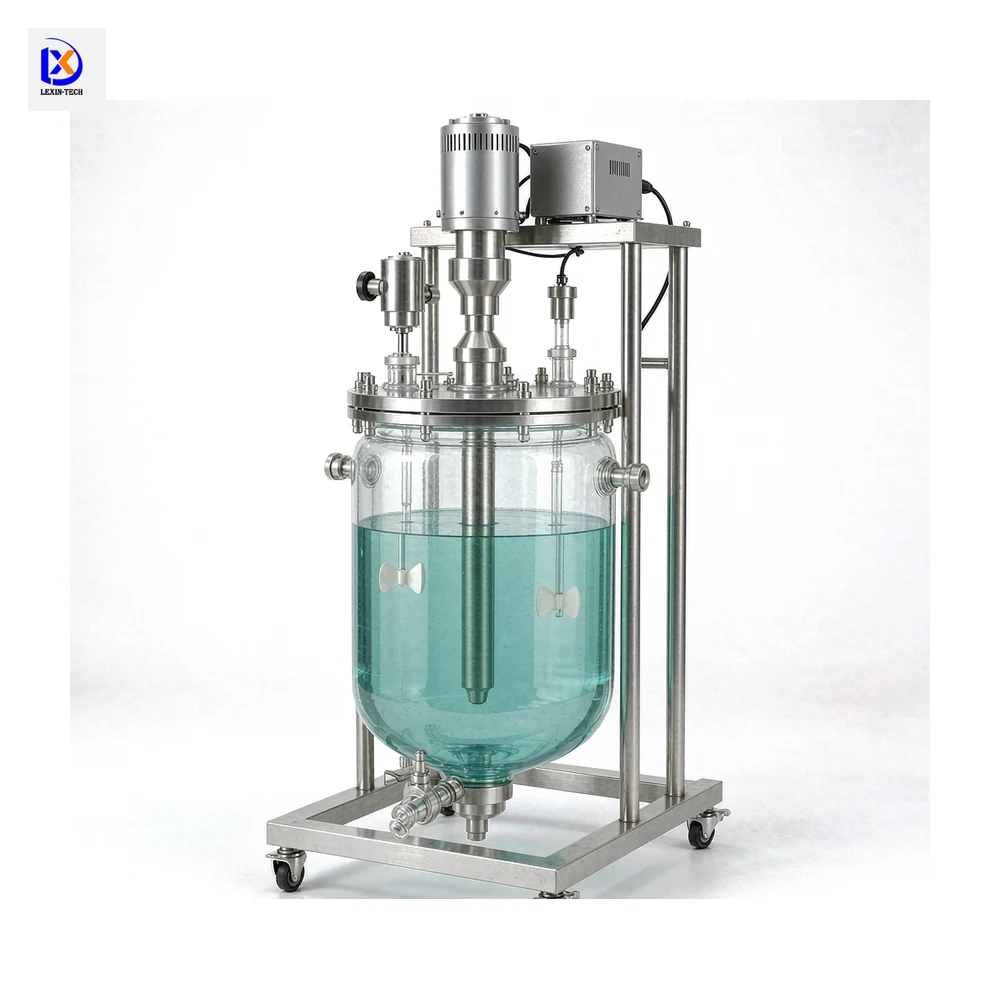
Ultrasonic leaching reactor, 2–10 L double-jacketed GG17 glass, 20 kHz probe at 300–1500 W, 5–80 °C, for cavitation-enhanced leaching of refractory oxides and slags.
- Built to order
Engineered against your feed assay and throughput - Bench & pilot tested
Sample testing before the flowsheet is frozen - Export documented
Pre-tested, skid-mounted, documented for customs - EN / ES / RU / AR
Technical support in four languages
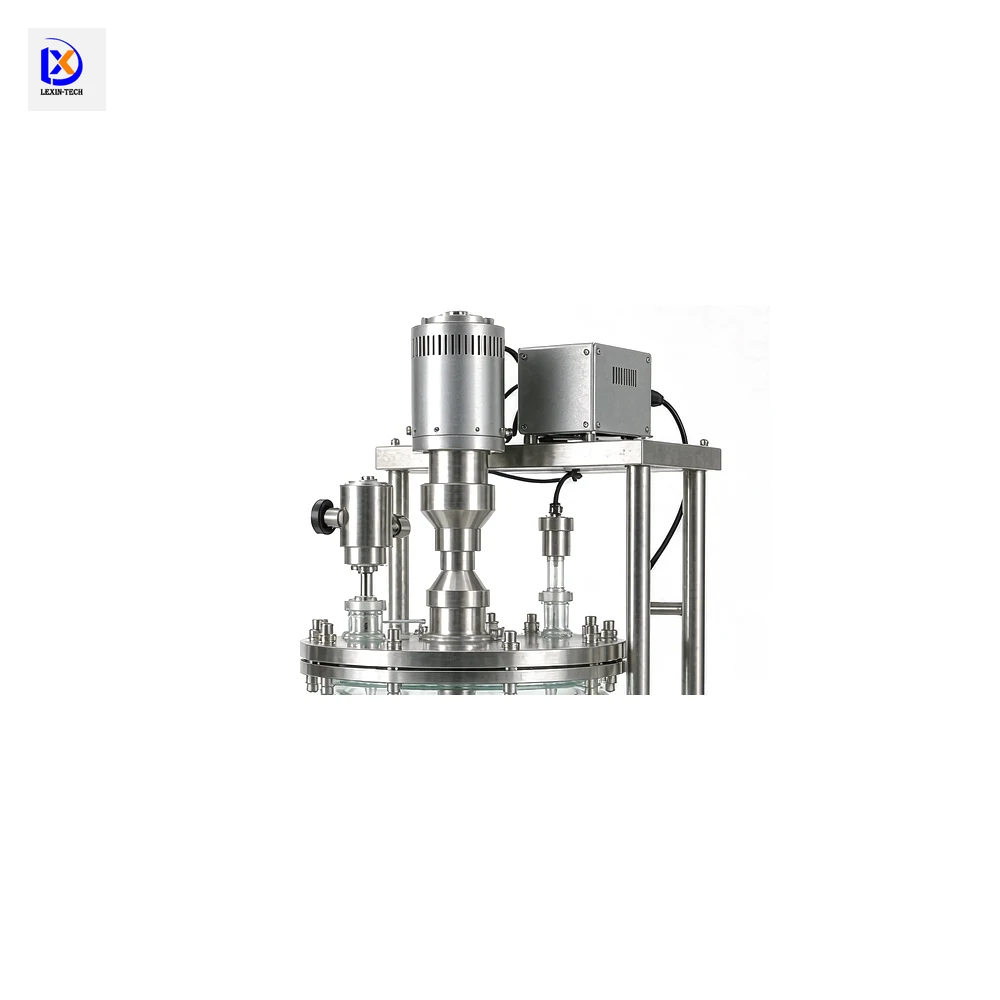
Ultrasound does one useful thing in leaching: it breaks the boundary layer and the surface passivation that slow a reaction down, and it does it without raising the temperature. This reactor pairs a 2, 5 or 10 L double-jacketed GG17 vessel with a 20 kHz titanium sonotrode rated 300–1500 W, dipped to the vessel bottom so the cavitation cloud sits where the solids are.
Running it
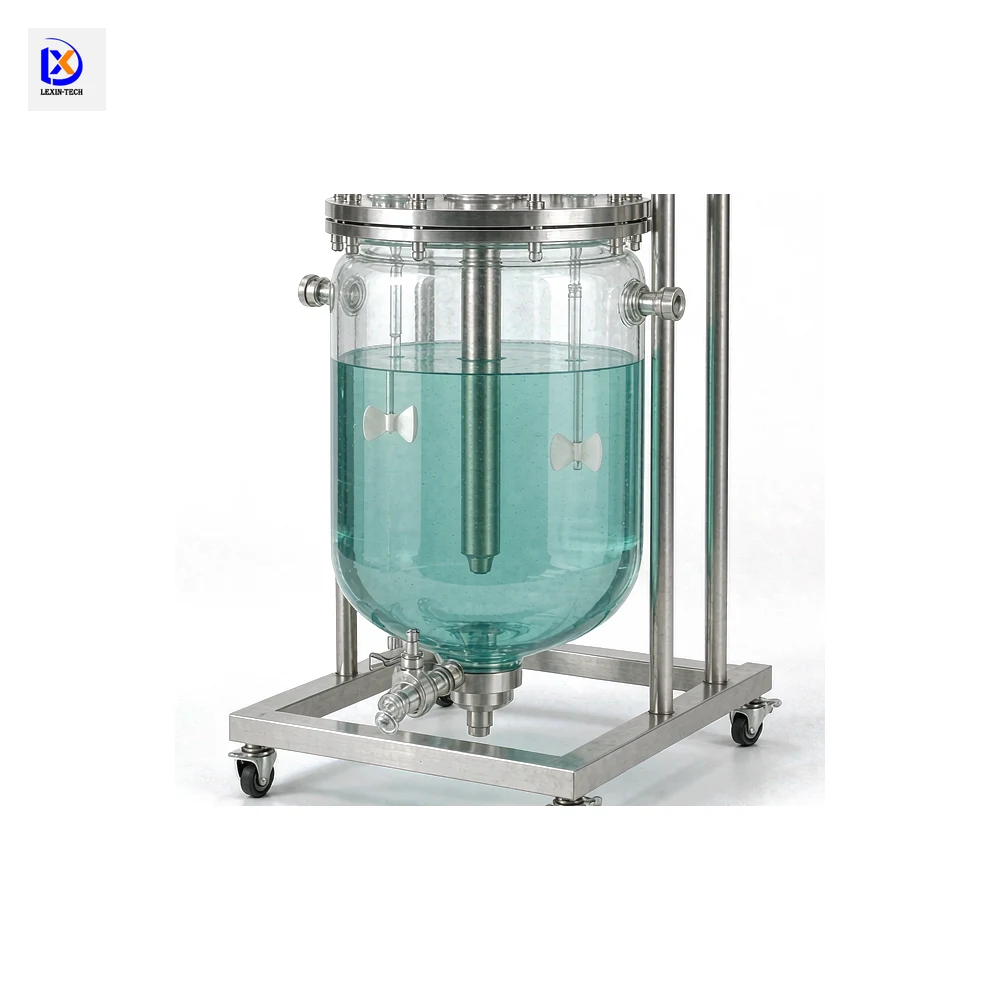
The generator offers 20–100% amplitude and pulse mode, which matters because continuous full-power sonication heats the probe and erodes it. A PTFE-coated overhead stirrer at 0–600 rpm keeps the pulp suspended between pulses, and the jacket, fed from an external circulating bath, holds 5–80 °C with a PT100 probe and over-temperature interlock.
When it is worth the complication
If your rate is limited by surface passivation, by an encapsulated phase, or by a slag that will not break down, sonication changes the answer. For ordinary oxide leaching it adds cost and probe wear without moving the curve, and the same test in a plain glass reactor will tell you that in a day.
Service limits are the glass and the seals: H2SO4 to about 150 g/L, no fluoride and no chloride. The sonotrode is titanium and the gaskets PTFE, so the wetted set is otherwise the most tolerant part of the unit.
Specifications
| Reactor Capacity | 2 L, 5 L or 10 L double-jacketed borosilicate glass (GG17) vessel; final sizing to be confirmed by test work |
|---|---|
| Vessel Material | GG17 borosilicate glass with PTFE lid seals; suitable for H2SO4 |
| Ultrasonic System | 20 kHz titanium sonotrode probe with piezo transducer, 300-1500 W adjustable output, dip length to vessel bottom |
| Ultrasonic Generator | Microprocessor generator with pulse mode, amplitude control 20-100% and overtemperature protection |
| Agitation | PTFE-coated overhead stirrer, 0-600 rpm variable speed, for bulk suspension maintenance during sonication |
| Temperature Range | 5-80 C via jacket served by external circulating bath; PT100 probe with overtemperature interlock |
| Operating Mode | Atmospheric batch operation, intermittent or continuous sonication (duty cycle to be confirmed by test work) |
| Drain and Sampling | Bottom PTFE drain valve and side sampling port for kinetic profiles |
| Wetted Materials | Titanium sonotrode, PTFE gaskets, borosilicate glass, 316L frame; fluoride or high-chloride systems require titanium-wetted or PTFE-lined options |
| Applications | Cavitation-enhanced leaching of refractory oxides and slags, secondary-resource leaching, desliming and reagent screening tests |
Values are the documented specifications for this model. Final dimensions are confirmed on the approved drawing before production.
Related products
-
Lab-Scale PP Reactor
PriceOn request — the first reply carries a budget band and a lead time, within one business day -
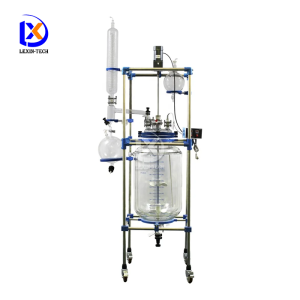
Lab-Scale Glass Reactor
PriceOn request — the first reply carries a budget band and a lead time, within one business day -
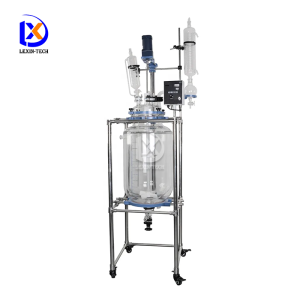
Alkali Resistant Glass Reactor
PriceOn request — the first reply carries a budget band and a lead time, within one business day -
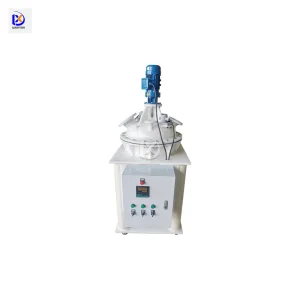
Lab-Scale Carbon-in-Leach (CIL) Reactor
PriceOn request — the first reply carries a budget band and a lead time, within one business day