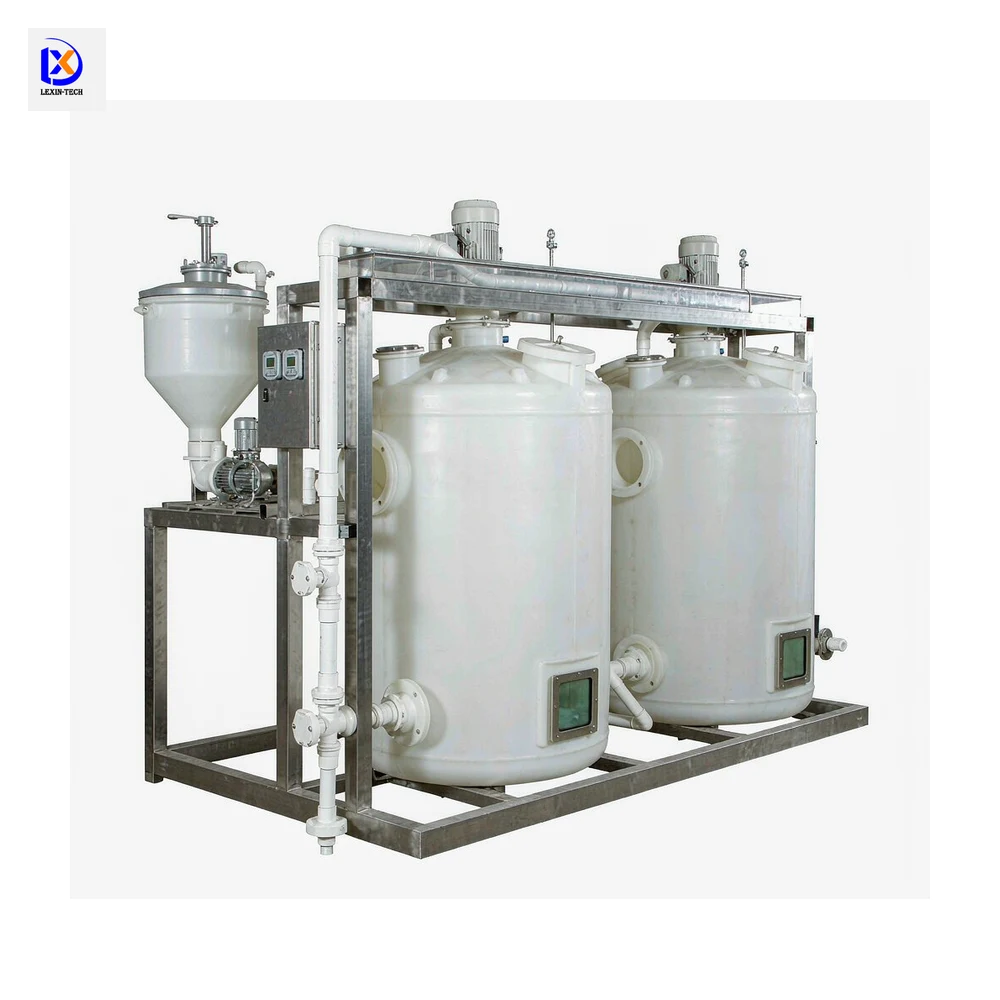
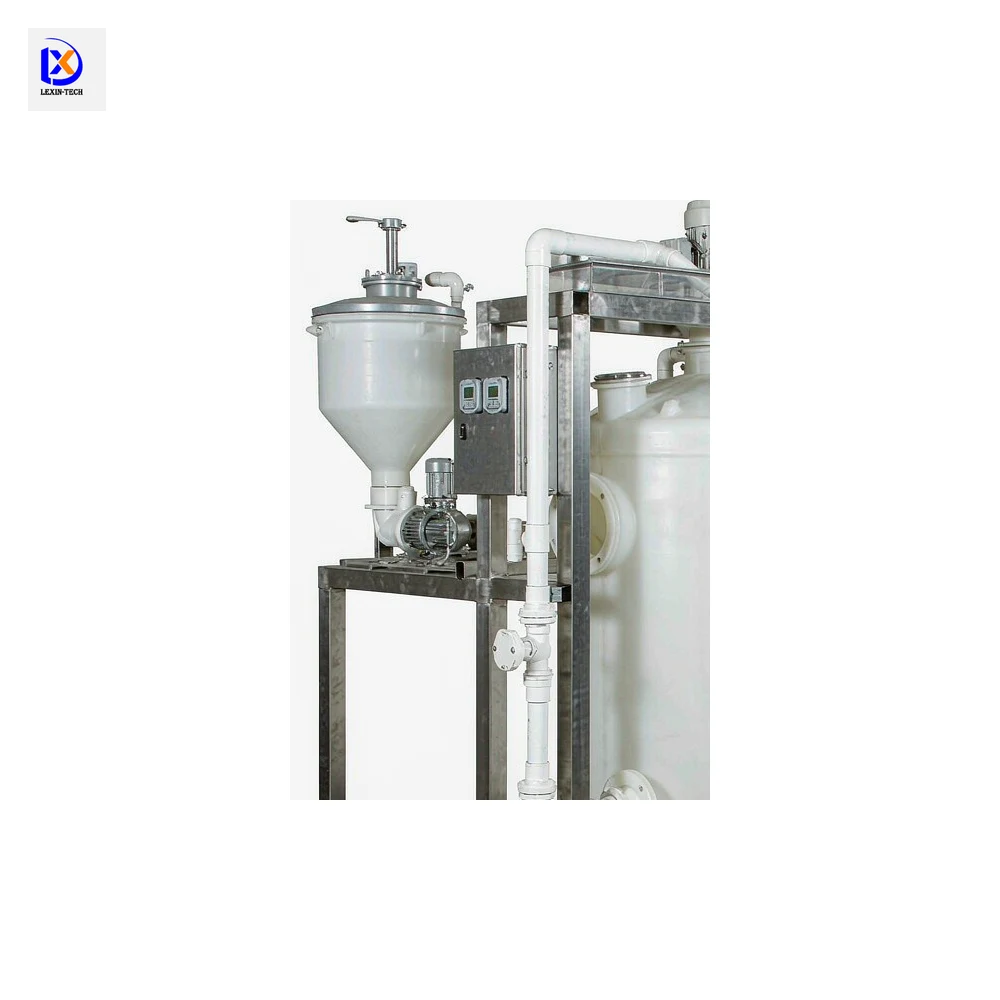
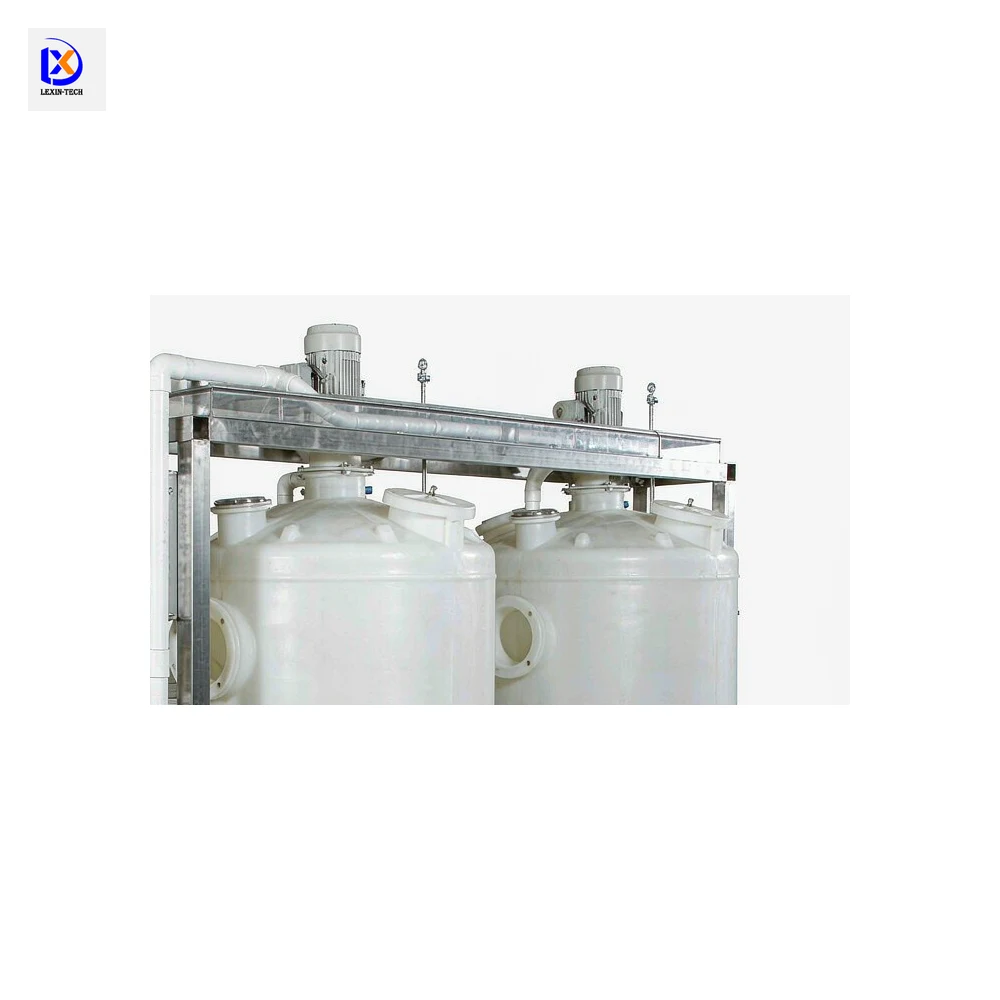
Pilot-Scale Two-Stage Lime Neutralization Skid
PriceOn request — the first reply carries a budget band and a lead time, within one business day
Two-stage lime neutralisation skid for acid mine drainage and process effluent: pH 4–5 in the first stage to drop iron and gypsum, pH 8–9 in the second to drop manganese, zinc, copper and nickel, with reaction volume, flocculant dosing and thickener underflow sized for a pilot flowsheet.
- Built to order
Engineered against your feed assay and throughput - Bench & pilot tested
Sample testing before the flowsheet is frozen - Export documented
Pre-tested, skid-mounted, documented for customs - EN / ES / RU / AR
Technical support in four languages
Acid rock drainage and many process effluents carry two groups of metals that will not come out of solution at the same pH. Iron and aluminium hydrolyse and precipitate between pH 4 and 5; manganese, zinc, copper, nickel and cadmium need pH 8 to 9.5. A single-stage circuit forced to the higher setpoint redissolves part of the amphoteric metals, and a single-stage circuit held at the lower one passes manganese straight through. The two-stage skid exists to separate those two duties into two vessels with their own pH control, their own flocculant addition and their own sludge take-off.
Why the stages are separated
The first stage has a second job beyond iron removal: it makes gypsum. Sulphate in AMD runs from a few hundred mg/L to several grams per litre, and at pH 4–5 with lime present it precipitates as CaSO4·2H2O. Gypsum is the bulk of the sludge volume, and it is also the reason single-stage plants blind their lime addition lines and coat their pH probes. Taking gypsum out early keeps the second-stage reactor free of the scale that otherwise forms when the same slurry is pushed to pH 9.
Iron oxidation state matters as much as pH. Ferrous iron does not precipitate cleanly until it is oxidised to ferric, which is why the first stage is usually aerated or dosed with oxidant before the pH is trimmed. A first stage that reaches pH 4.5 with half the iron still ferrous will pass that iron into the second stage, where it consumes lime, reports to the wrong sludge, and drags the effluent iron number around for the rest of the campaign.
What the two setpoints actually buy
Published work on two-step neutralisation reports the split clearly: bringing AMD to about pH 5 with lime removes only around 14% of total iron, 6% of manganese and 14% of zinc, because the pH is being used for gypsum and partial iron hydrolysis rather than for metal finishing. The second step, taken to pH 10.2 with sodium hydroxide and an air flow of 50 mL/min over 20 minutes, takes all three to above 99.7%, with residual total iron, manganese and zinc at roughly 80, 810 and 30 µg/L. With lime alone as the second reagent the same circuit typically lands at pH 8.5–9 and reaches low single-digit mg/L rather than µg/L — which is usually enough for a discharge consent, and is what a lime-only skid should be specified against.
Practically, the pilot skid runs stage 1 at pH 4.0–5.0 and stage 2 at pH 8.0–9.0, with the second setpoint chosen by the metal that is hardest to remove. Manganese is normally the constraint: it needs the top of that range plus oxidation, and it is the reason many plants end up adding a small sodium hydroxide or hypochlorite trim rather than pushing more lime.
Why a pilot skid and not a jar test
Jar tests give you the setpoints. They do not give you the three numbers a thickener and a filter press are sized on: the settling rate of the floc, the underflow density at which the sludge can still be pumped, and the specific resistance to filtration of the cake. Those three come out of a continuous run with real slurry, real flocculant make-down and a real underflow. A pilot skid that holds 30–60 minutes of reaction volume per stage at nominal flow, doses flocculant at 5–30 g/t and returns a thickened underflow of 2–5% w/w solids produces exactly those numbers, and does it on the same feed that the full plant will see.
The other thing the pilot settles is reagent consumption in kg per m³, which is the number that decides whether the operating cost of the plant closes. Lime demand is dominated by free acid and by the sulphate that leaves as gypsum, not by the metals, so a pilot with a totaliser on the lime slurry line is worth more than any amount of stoichiometry done on paper.
What to send for a quotation
- Flow rate and the full water analysis, including sulphate, iron (ferrous and total), manganese, zinc, copper, nickel, arsenic and acidity.
- Discharge consent or the target effluent numbers, and whether manganese has to meet them.
- Whether lime, hydrated lime, sodium hydroxide or a combination is available on site, and at what delivered cost.
- Sludge handling downstream: thickener, filter press or drying beds, and the cake dryness that has to be reached.
- Ambient conditions and whether the skid sits indoors or in a container.
Specifications
| Throughput (aqueous) | 0.5 – 5 m³/h, as built |
|---|---|
| Stage 1 pH setpoint | 4.0 – 5.0 (iron hydrolysis, gypsum precipitation) |
| Stage 2 pH setpoint | 8.0 – 9.0 (Mn, Zn, Cu, Ni); up to 10.2 with NaOH trim |
| Reaction volume | 30 – 60 min per stage at nominal flow |
| Oxidation | Aeration blower or oxidant dosing on stage 1 |
| Lime reagent | Hydrated lime slurry, 10 – 25% w/w, pH-controlled dosing |
| Flocculant | Anionic PAM, 0.05 – 0.1% working solution, 5 – 30 g/t |
| Underflow solids | 2 – 5% w/w after thickening |
| Typical effluent | Fe < 1 mg/L, Mn < 1 mg/L, Zn < 0.5 mg/L (lime only) |
| Wetted materials | PP / FRP vessels, 316L where abrasive, PVDF or PP piping |
| Instrumentation | pH per stage (duty + standby), ORP, flow totaliser, level |
| Footprint | ≈ 6.0 × 2.4 m skid, 2.2 m height |
Values are the documented specifications for this model. Final dimensions are confirmed on the approved drawing before production.
Frequently asked questions
Why not one stage at pH 9?
Because the iron and the gypsum both end up in the wrong place. A single stage to pH 9 precipitates iron hydroxide inside the same vessel that is making gypsum, so the sludge is a mixture that dewaters badly and cannot be sold or reused, and part of the amphoteric metals redissolve as the pH drifts. Two stages let you take a gypsum-rich cake out of stage 1 and a much smaller metal-hydroxide cake out of stage 2.
Can the second stage use sodium hydroxide instead of lime?
Yes, and published work shows it reaches µg/L residuals rather than mg/L. The trade-off is reagent cost and the fact that NaOH does not contribute to gypsum removal, so the first stage still has to carry the sulphate load. Most plants run lime in both stages and add NaOH only as a trim where manganese is the binding consent limit.
How much sludge should the pilot produce?
Expect the majority of the dry solids to come from stage 1 as gypsum. A pilot that measures dry solids per m³ in each stage separately is far more useful than one that measures the combined figure, because the two sludges usually go to different places.
Does the skid include the thickener?
The reaction, flocculation and pH control are on the skid. Thickening can be a lamella or a conventional clarifier, on-skid or separate, depending on the underflow density target and the footprint available.
Related products
-
Laboratory Pressure Leaching Autoclave
PriceOn request — the first reply carries a budget band and a lead time, within one business day -
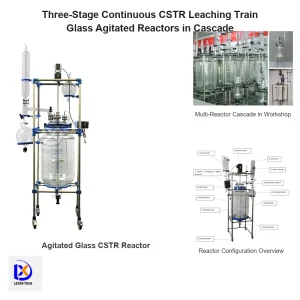
Three-Stage Continuous CSTR Leaching Train
PriceOn request — the first reply carries a budget band and a lead time, within one business day -
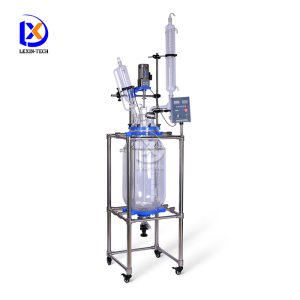
Pilot-Scale Glass Reactor
PriceOn request — the first reply carries a budget band and a lead time, within one business day -
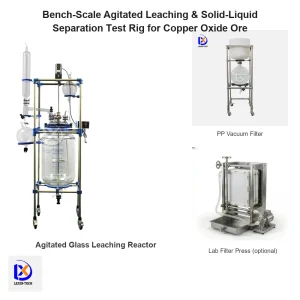
Lab-Scale Agitated Leaching and Solid-Liquid Separation Unit
PriceOn request — the first reply carries a budget band and a lead time, within one business day