Laboratory Gravity Shaking Table
PriceOn request — the first reply carries a budget band and a lead time, within one business day
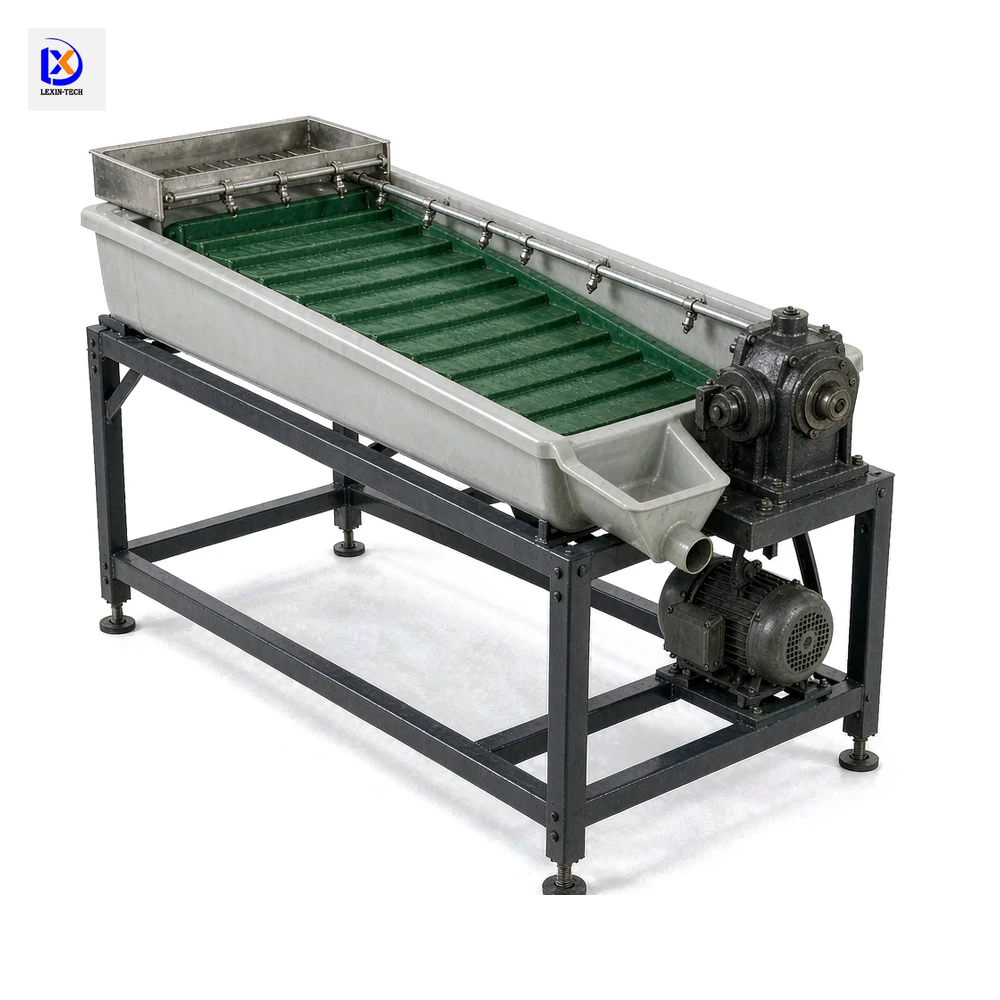
Laboratory gravity shaking table for test work: 1100 x 500 mm FRP deck, adjustable stroke and slope, 20-80 kg/h at -2 mm feed.
- Built to order
Engineered against your feed assay and throughput - Bench & pilot tested
Sample testing before the flowsheet is frozen - Export documented
Pre-tested, skid-mounted, documented for customs - EN / ES / RU / AR
Technical support in four languages
A laboratory shaking table answers two questions that decide whether gravity is worth pursuing at all: does the ore respond, and at what size does the response disappear. It is a rougher by nature — a good one produces a concentrate you can clean, not a saleable product.
The deck and its motion
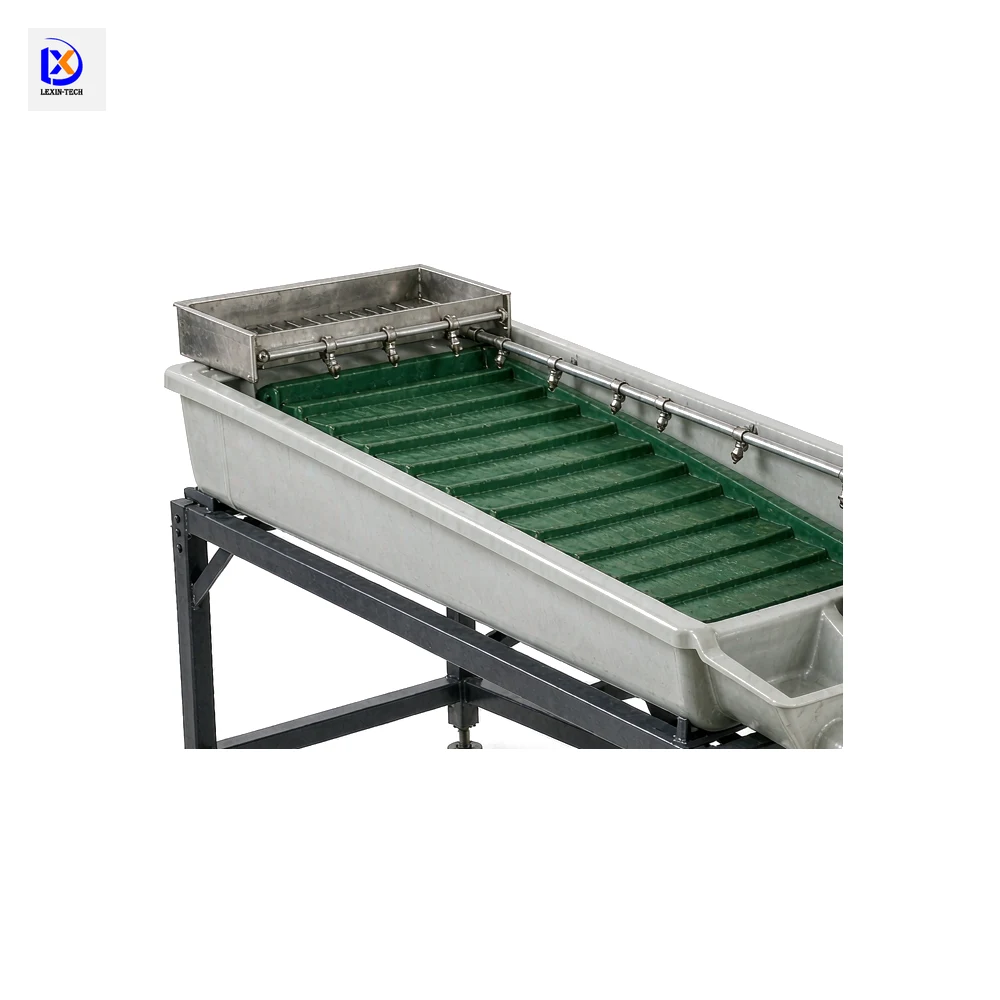
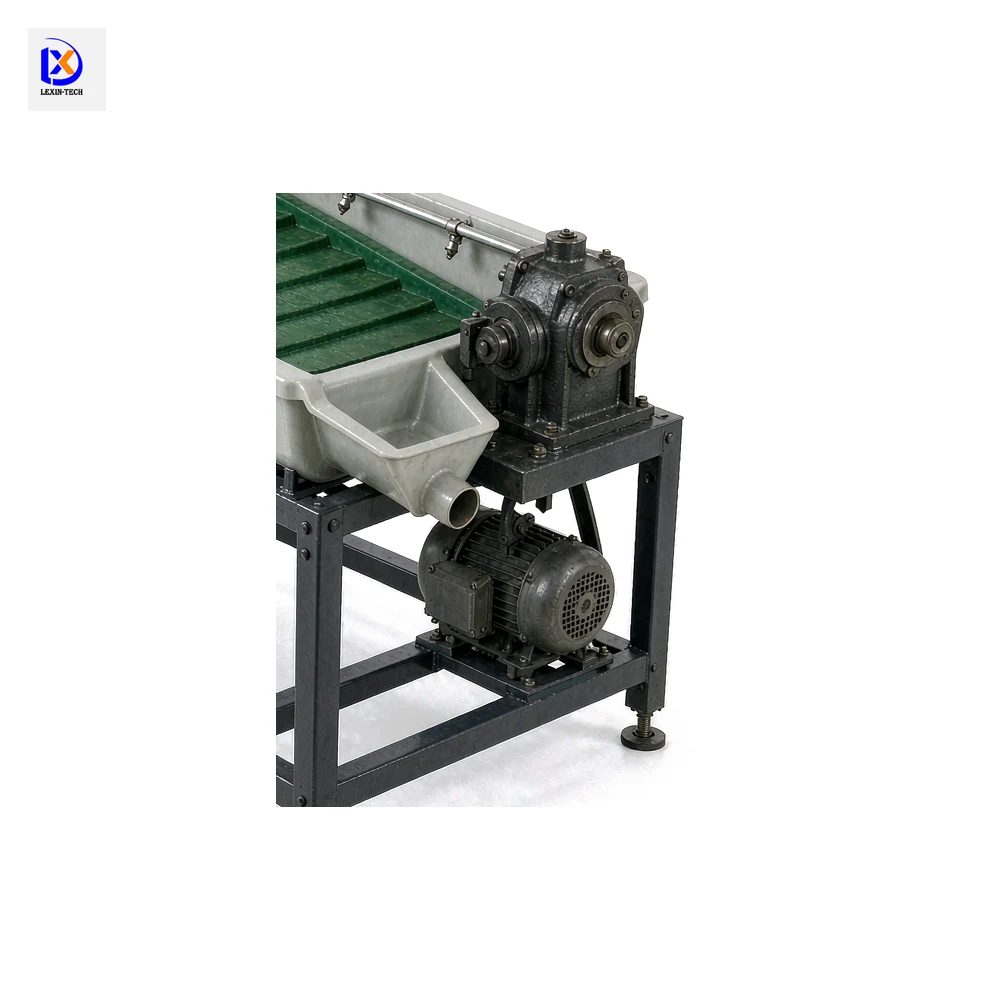
An 1100 × 500 mm FRP deck with a moulded rubber riffle mat, driven by a cast-iron eccentric head with 8–16 mm adjustable stroke at 280–360 rpm through a 0.55 kW VFD drive. Slope runs 0–4° longitudinally with a transverse tilt screw, and wash water is delivered through an adjustable feed-box spray bar at 0.3–1.0 m³/h.
Feed is −2 mm for typical gravity test work, at 20–80 kg/h depending on size, grade and liberation. Wetted parts are FRP with 304/316L feed box and launders, suitable for pH 3–11 pulps; HF or strong chloride-acid systems need factory consultation before the deck is specified.
What the test actually delivers
Record concentrate, middlings and tailings masses, assay all three, and plot grade against recovery for three or four cuts. A single pass tells you the ore responds; a rougher followed by a cleaner on its own concentrate tells you what a circuit would do. Anything less is a number that cannot be scaled.
Where the table stops
Below roughly 50 µm with a small density difference, the water film dominates and the value mineral reports to tailings regardless of setting. That is the point to test a centrifugal unit, a wet high-intensity magnetic separator for paramagnetic values, or flotation for sulphide feeds — and the point where most gravity programmes quietly stop being gravity programmes.
Send the size analysis, mineralogy and target concentrate grade, and we will propose the test sequence and starting deck settings.
Specifications
| Deck Size | 1100 x 500 mm laboratory-scale FRP deck with moulded riffle mat |
|---|---|
| Deck Surface | Dark green rubber riffle mat with diagonal riffles and smooth cleaning zone at the concentrate end |
| Head Motion | Cast iron eccentric head motion, adjustable stroke 8-16 mm |
| Stroke Frequency | 280-360 rpm, adjustable via VFD |
| Drive Motor | 0.55 kW with variable frequency speed control |
| Feed Size | -2 mm typical for gravity test work (to be confirmed by test work) |
| Feed Capacity | 20-80 kg/h depending on feed size, grade and liberation (to be confirmed by test work) |
| Wash Water | 0.3-1.0 m3/h via adjustable feed-box spray bar and wash-water launder |
| Slope Adjustment | Longitudinal deck slope 0-4 degrees plus transverse tilt screw |
| Wetted Materials | FRP deck, 304/316L feed box and launders; suitable for neutral to mildly acidic pulp pH 3-11; HF or strong chloride-acid systems require factory consultation |
Values are the documented specifications for this model. Final dimensions are confirmed on the approved drawing before production.
Related products
-
Laboratory Wet Sieve Shaker
PriceOn request — the first reply carries a budget band and a lead time, within one business day -
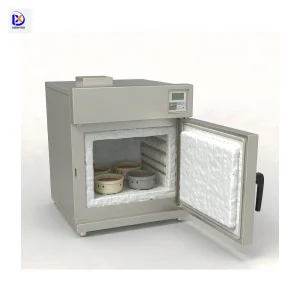
Laboratory Muffle Furnace for Ashing and Calcination Tests
PriceOn request — the first reply carries a budget band and a lead time, within one business day -
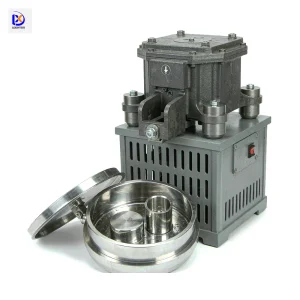
Laboratory Ring and Puck Pulverizer
PriceOn request — the first reply carries a budget band and a lead time, within one business day -
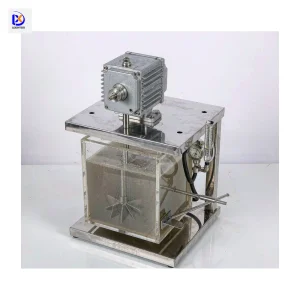
Laboratory Batch Flotation Cell
PriceOn request — the first reply carries a budget band and a lead time, within one business day